
Discover Your Ideal Education Event
Filter by event category, format, subject and educational phase
Showing 12 of 78 events
AI in learning & teaching
Explore the transformative impact of AI tools on higher education, with discussions on practical applications, ethical concerns, and the evolving role of educators in an AI-enabled world. In the fifth session of the free CODE learning and teaching webinar series , we will explore the positive and challenging impact on learning and teaching in Higher Education by Gen AI tools. In particular, we will discuss practical applications of using AI-powered systems in the curriculum and how these can enhance learning and teaching while also considering the concerns, issues around equity and privacy, and how the role of the educator needs to evolve to prepare students for an AI-enabled world. The session will draw from recent UK case studies and international best practices.

Developing leadership innovatively in the education sector
Investment in quality professional development for staff can have a significant impact on retention. Our webinar will explore innovative uses of the apprenticeship levy to improve leadership development and retention. This webinar is the second in our series of engaging webinars focussed on staff retention which continues to be an area of challenge for schools, as reflected in the recent release of the School Workforce Data. Investment in quality professional development for staff can have a significant impact on retention. Our webinar will explore innovative uses of the apprenticeship levy to improve leadership development and retention. As schools and academy trusts navigate the recent caps on NPQ programme spaces, our discussion will explore the application of leadership apprenticeships and how they can be effectively used to meet leadership development needs. Key Takeaways: 1. Understand how leaders in your sphere can access leadership development through the apprenticeship levy 2. Discover how to use leadership apprenticeships for developmental needs

How to effectively manage absence in schools and academy trusts
Join Josh Ambrose and Femi Oyedola from Strictly Education for an engaging webinar on how to effectively manage staff absence within your establishment. In this session we will share a number effective strategies guaranteed to improve absence within your school or academy trust including: The current absence landscape within the education sector Absence Reporting RTW Occupational Health Overview Q/A
From short-term solutions to lasting change in teacher retention
In this practical 30-minute session, experts from Access Education and Eteach Group dive into how schools can move beyond quick fixes to create meaningful, long-term change in teacher retention.
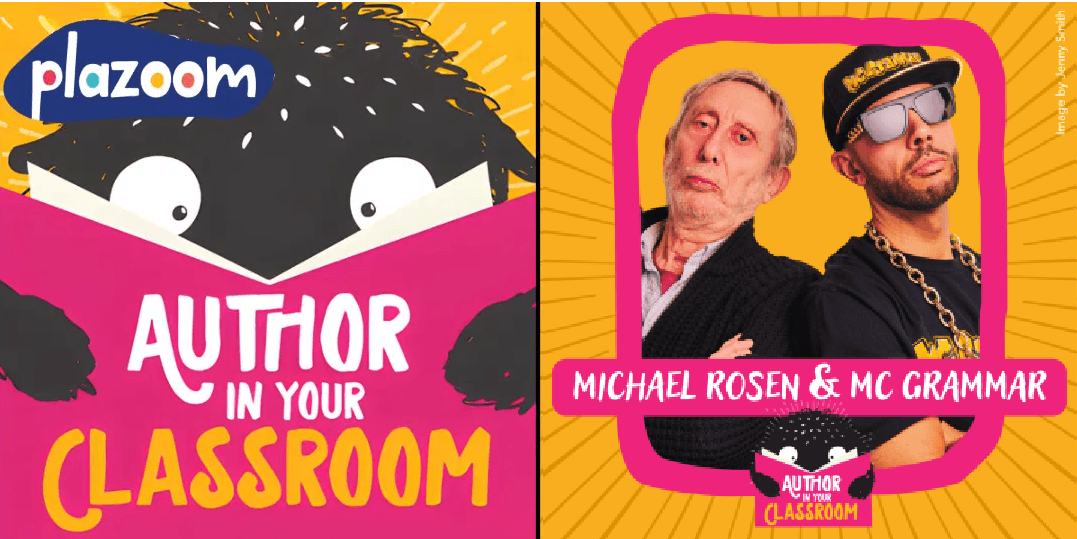
Write a rap with Michael Rosen and MC Grammar
In this brilliantly bonkers episode of AIYC, Michael Rosen and MC Grammar join host Helen Mulley to explore rap, rhyme and collaborative writing, sharing practical ideas to help children fall in love with language. They also talk about their new book, Ridiculous Raps and Rhymes – a hilarious, high-energy rhyming adventure. Using this episode as a foundation, the free accompanying resource pack helps children explore the craft of rap. They’ll think about what makes a great rap or poetry performance, experiment with rhythm and rhyme, and discover how ideas often become stronger when writers work together. Teaching overview The unit begins by exploring the relationship between poetry and rap. Pupils listen to performances by Michael Rosen and MC Grammar, discussing rhythm, rhyme and repetition, and considering how poems and raps use language to create meaning, energy and enjoyment. They also reflect on the similarities and differences between the two forms, thinking about what makes each unique. Pupils then explore performance and collaboration. They consider how expression, pace and rhythm bring words to life, before discussing how Michael Rosen and MC Grammar developed ideas together. Through this, they reflect on the importance of listening, sharing ideas and working creatively with a partner. The next stage focuses on creating original raps. Working in pairs, pupils gather ideas, experiment with words and rhythms aloud, and develop their writing through discussion and rehearsal. They gradually shape and refine their raps, using repetition, rhyme and performance techniques to strengthen their work. The sequence concludes with performance and reflection. Pupils share their raps with others, respond to feedback and consider what they have learned about writing collaboratively, performing confidently and using spoken language creatively, leaving the unit with a deeper appreciation of poetry, rap and the creative writing process.
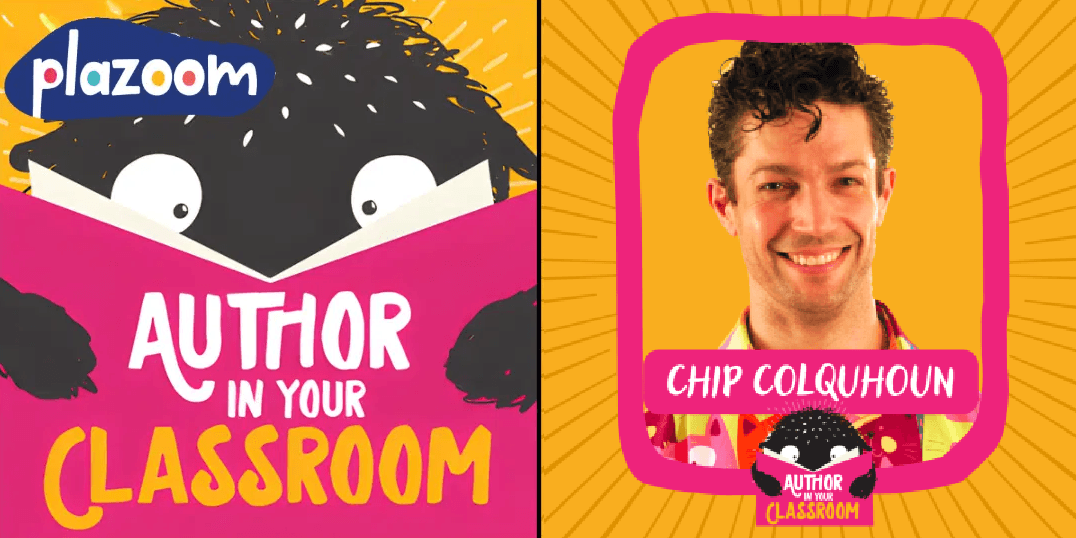
Become a storyteller with Chip Colquhoun
In this set of lessons, author Chip Colquhoun invites KS2 pupils to explore storytelling as something everyone does daily, showing how personal experiences, memories and familiar tales can all become the starting point for original writing. Using an episode of the Author in Your Classroom podcast as a foundation, the resource encourages children to think about what storytelling really is and where ideas come from. Pupils listen to Chip reflect on storytelling as a shared human activity, discuss the stories they encounter in their own lives and consider how writers take inspiration from existing stories to create something new. Teaching overview The unit begins by exploring storytelling as a part of everyday life. Pupils listen to Chip describe how stories are told in many different ways, share their own examples and identify key stories that have shaped their thinking or experiences. They then gather inspiration from a range of sources, including books, films, games and personal memories, building a bank of ideas for their own writing. Pupils then move on to story structure, where they break down familiar narratives into key moments. They use these ‘story beats’ to support planning, adapting known structures to develop their own original ideas while maintaining a clear sense of shape and progression. The next stage focuses on oral rehearsal. Pupils retell their stories aloud, experimenting with expression, rhythm and clarity. Through talking their ideas through, they refine plot details and strengthen their understanding of how stories work in practice. Following this, pupils begin writing their own story or opening. They draw on narrative techniques such as dialogue, description and humour, using their plans as support while making creative choices and improving their work through reflection and peer discussion. Win an author visit from Chip Colquhoun Anyone who pre-orders Bestest Story in the World Ever before 10th September 2026 can enter a draw to win a free school author visit from Chip Colquhoun by uploading their receipt at Epic Tales. 30 schools will win in total, with entries rolling over each month for more chances to win. Buying from a bookshop could double your chances, since bookshops can also nominate schools directly.
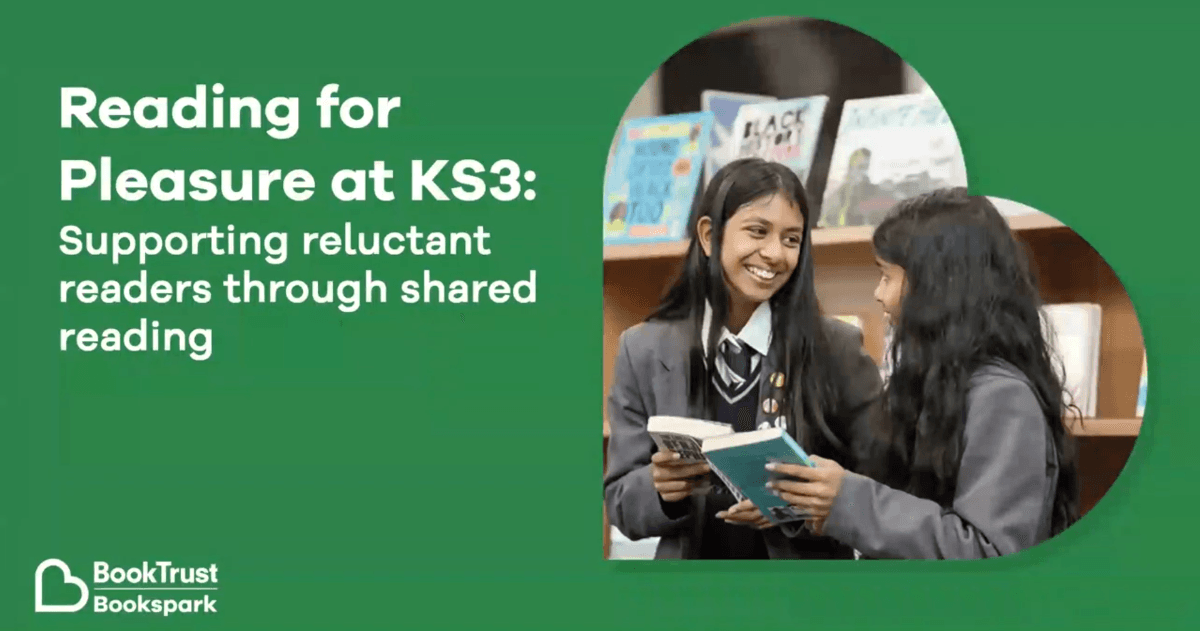
Reading for Pleasure at Key Stage 3: Supporting reluctant readers through shared reading
Watch our webinar all about how shared reading in Key Stage 3 can support reluctant readers, with teacher Dónall Dochartaigh, SLA Secondary School Librarian of the Year Julie Broadbent, and author Athena Kugblenu. Find out more about Bookspark here: https://www.booktrust.org.uk/bookspark
An introduction to Metacognition - Webinar 1
Join me for the first in my series of 6 webinars on metacognition! In this first session, we will explore the importance of developing metacognition in the classroom, as well as enhancing our understanding of exactly what metacognition is, and isn't. You'll also develop an awareness of what metacognition looks like in day-to-day life, and in the classroom.

Tudor Study Day 2026: online sessions (KS5)
Our online sessions engage students in historical enquiry from their classroom. Interacting live with experienced educators from The National Archives students will develop their skills of analysis and deepen their understanding of evidence by examining documents. You only need a microphone, large screen and webcam to take part. Interactive activities encourage students to discuss their ideas and work in groups using high-quality materials provided in advance by the Education team. Please note that in accordance with our safeguarding policy, and to avoid unnecessary disruption, class/subject teachers must stay with their class for the duration of the online session. If the teacher is not present for any part of the workshop or if a cover teacher is used, we will be unable to proceed with the session. You can contact the Education Team on educationbookings@nationalarchives.gov.uk if you have any questions about booking onto sessions. I f you would like to talk to someone about your booking please contact us on 0203 9089162.
SEND reforms – challenges, opportunities and next steps for schools
We bring together experts with specialisms in SEND, inclusion, alternative provision and more to discuss the SEND Reform: ‘Putting Children and Young People First’. We discuss the challenges, opportunities and gaps in the reforms and share advice on practical next steps for the new academic year and beyond. What the ‘universal offer’ should include to be effective in mainstream education How Individual Support Plans (ISPS) can help provide consistency between school systems supporting transition between different settings What schools need to consider to ensure inclusion bases work well in practice How alternative provision and mainstream settings can work more closely together Clarity on what detail is needed to address gaps in the current documentation and give schools clearer next steps

How can schools prevent students from becoming NEET?
What can secondary schools do to support students to find fulfilling post-16 pathways? Our latest SecEd webinar on March 24 will offer practical strategies for engaging with young people at risk of becoming NEET, including identifying early indicators, re-engaging disaffected students, and boosting attendance. Official figures tell us that 946,000 young people aged 16 to 24 are currently NEET – not in education, employment or training. This is 12.7% of all people in this age group and a number that has been rising since 2021. In this webinar, we considered what secondary schools and local authorities can do to prevent young people from becoming NEET. The discussion offered strategies for school leaders and teachers to help foster a better sense of belonging in school, including for those who face additional challenges such as being disadvantaged or having SEND, so that young people attend, engage, and make progress at school, and are helped to find suitable future pathways post-16. The webinar was hosted by SecEd and our sister magazine Children and Young People Now in partnership with Tute Education, a DfE-accredited online education partner trusted by local authorities, schools, and non-mainstream settings. Tute Education provides live online education for students in key stages 1 to 5, delivered by qualified teachers through a purpose-built platform. Their provision is used flexibly, from short-term support to longer-term placements, depending on need.

ESD: Driving change towards sustainable schools
Education for Sustainable Development This course, which forms part of WWF's Education for a sustainable planet learning path, aims to help you further your understanding of sustainability and equip you with relevant information, tools, activities and good ideas from other skilled practitioners to make Education for Sustainable Development a cornerstone of your teaching practice. What will you gain from the course? An understanding of what is meant by a ‘whole school approach’ to ESD Tools and guidance for implementing a whole school approach to ESD in your institution; An understanding of the positive impact a school can have in the wider community and beyond; and Inspiration and ideas from case studies of successful whole school ESD implementation from around the world.