
Discover Your Ideal Education Event
Filter by event category, format, subject and educational phase
Showing 12 of 24 events
Online CPD: Teaching Macbeth at Key Stage 4
Join this Continuing Professional Development session to enhance your classroom teaching of Shakespeare’s epic tragedy Macbeth at Key Stage 4. Aimed at Secondary English and Drama teachers, it will offer exciting techniques to engage with Shakespeare through active and creative approaches in the classroom. It provides teachers with a range of exciting activities to share with students to deepen their understanding of the play’s characters, context, themes and imagery, and develop their critical thinking skills. You’ll gain: Dynamic techniques to get students to actively engage with the play and perform Shakespeare’s words, on their feet or at their desks Tools to help students to critically analyse his language, including use of verse and prose Skills in articulating different interpretations of the text Confidence to facilitate discussions around key themes and different interpretations, especially in contemporary contexts The chance to share ideas and challenges with other teachers This session has been developed for English teachers, with a particular focus on Key Stage 4. Techniques support assessment objectives AO1, AO2 and AO3. Your Online CPD session includes: A two hour Zoom workshop led by an expert Globe Education Practitioner A take-away session plan to help you embed your learning in the classroom
Creating Dyslexia-Inclusive Schools: A Capacity Building Programme
This two-part course explores key areas for primary schools in supporting pupils with dyslexia and literacy difficulties. This course explores key areas for primary schools in supporting pupils with dyslexia and literacy difficulties. The course aims to build school capacity through: Developing SENCo and English Lead knowledge of dyslexia Exploring appropriate assessment and target-setting approaches Developing effective whole-class strategies through high-quality teaching Coordinating SpLD (dyslexia) provision within school, including the use of appropriate interventions Managing parental and pupil concerns relating to dyslexia Day 1: Thursday 15th October 9:00am to 3:30pm · UK Definition of Dyslexia (New Delphi 2025) Early identification and assessment: formative and summative tools to support schools in identifying pupils with a dyslexic profile and informing reasonable adjustments and provision Exploring the impact of dyslexia on children and young people (CYP) Using assessment information to inform planning and next steps GAP TASK - Assessment Day 2: Thursday 5th November, 9:00am to 3:30pm Dyslexia-Friendly Classrooms: effective high-quality adaptations and the removal of barriers to learning An introduction to targeted and personalised interventions Developing policy and practice, including whole-school ethos and working with parents and external agencies Delegates will receive a toolkit to support implementation of learning and the development of ongoing good practice within school. An audit tool will be used throughout the course to help identify key actions for delegates to take forward on their return to school. Following attendance on both days, delegates will also be given access to CPD materials suitable for a staff meeting. Outcomes Through this training, delegates will: Understand current definitions of dyslexia Use current assessment approaches to support the identification of pupils with SpLD (dyslexia) Understand how to remove barriers so pupils with a profile of dyslexia thrive Use the toolkit to audit current provision and develop an action plan to strengthen capacity and support for pupils with SpLD (dyslexia)
What Actually Improves Writing?
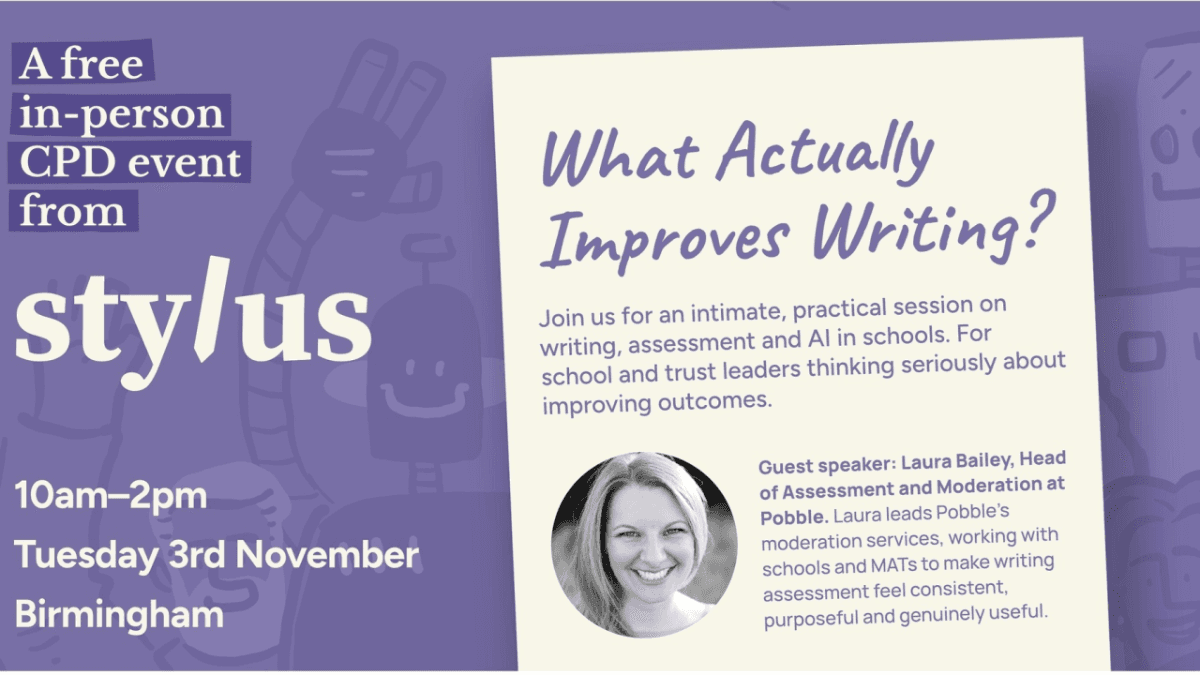
A free, in-person CPD half day for primary and secondary leaders on what actually improves writing - and what the evidence means for your classrooms. Guest Speakers: Laura Bailey, Head of Moderation and Assessment at Pobble Laura leads Pobble’s moderation services and their MAT statutory assessment services, working with multi-academy trusts and schools nationally. A former school leader with a background in school leadership and primary school improvement, she knows how important it is for moderation to feel supportive, consistent and empowering. Dominic Bristow & Hannah Gillott, Dominic Bristow, 𝐬𝐭𝐲𝐥𝐮𝐬 CEO & founder, and Hannah Gillott, Director of Schools, will share what 𝐬𝐭𝐲𝐥𝐮𝐬 is seeing across trusts and classrooms. A further external speaker is to be announced ahead of the day—sign up to secure your spot and we’ll keep you posted as the programme is confirmed. Sign up to secure your spot Places are limited to 40.
Supporting Students' Achievement Through Vocabulary in KS3 Conference
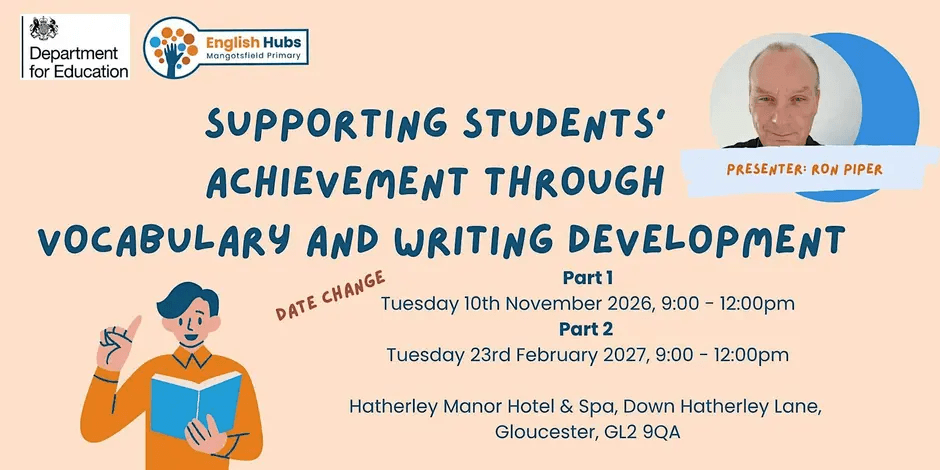
A two-part course for Secondary teachers whose specialism is not English to grow students' vocabularies and develop their writing skills. “The limits of my language are the limits of my world” - Ludwig Wittgenstein Current on-going research points to the fact that children with limited vocabulary in their early years struggle for the rest of their educational and adult lives to catch up and to close the gap with their word-rich peers. To be successful in a conceptually rich, academic curriculum, students need words and lots of them: in fact, at least 50,000. Without them students will struggle to achieve higher GCSE grades. Having the words is one thing but how we use them is critically important too. To do well, our students must be able to write in an academic style which has its own distinct (and teachable) stylistic features. For children whose linguistic environments are word poor and where complex language structures are not modelled at home, getting hold of the necessary academic language will prove challenging. The event will include: This two-part in-person course for Secondary teachers whose specialism is not English, will look at ways to grow students’ vocabularies and develop their academic writing skills using simple, unobtrusive, coaching styled strategies that can be integrated into departmental schemes of work. The two mornings will be highly participative and colleagues will be able to practise strategies with the benefit of peer support and discussion. About Ron Piper: Ron Piper is an experienced coach working in private and public sectors, delivering customised training programmes with a focus on leadership development, building relational cultures and confidence building. Previously a teacher, a senior school leader and teacher trainer, Ron holds a first degree in English Literature, a Master’s in drama and a PGCE. Additionally, he has a post graduate certificate in coaching and mentoring with NLP accreditations at practitioner, master, trainer and European coaching levels. He is a NOCN accredited Youth Coach and holds a Level 3 CPCAB qualification.
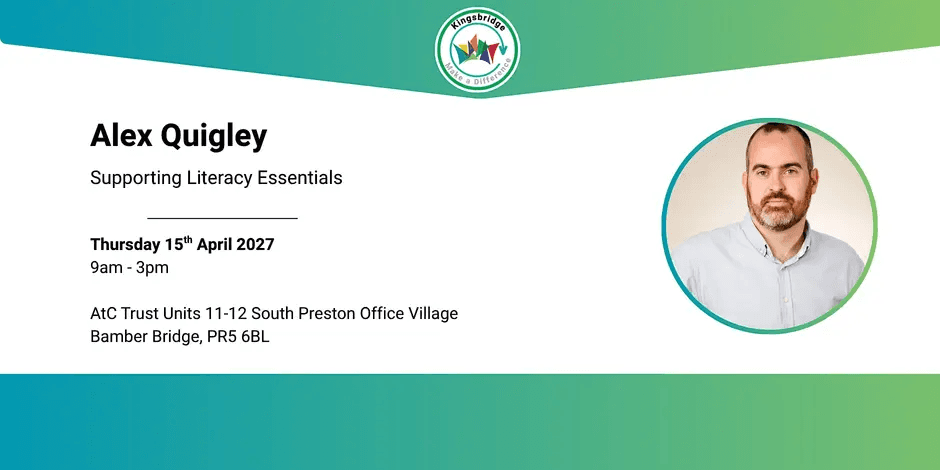
Supporting Literacy Essentials with Alex Quigley
Join Alex Quigley in person to gain practical solutions to transform literacy outcomes for the most vulnerable learners! Join us for Supporting Literacy Essentials with Alex Quigley! Come along for an in-person session where Alex Quigley dives into the key skills and strategies that make literacy come alive. Whether you're based in primary or secondary and a teacher or leader, this event is packed with practical tips to boost reading and writing skills forr your most vulerable learners Literacy provides some of the most significant and important challenges to learning in the classroom and beyond. In this PD day, Alex will explore the barriers that many pupils including our most vulnerable learners struggle with and provide practical solutions to transform literacy outcomes in the classroom. Don't miss out on this chance to learn from one of the best and connect with others who care about literacy just like you!
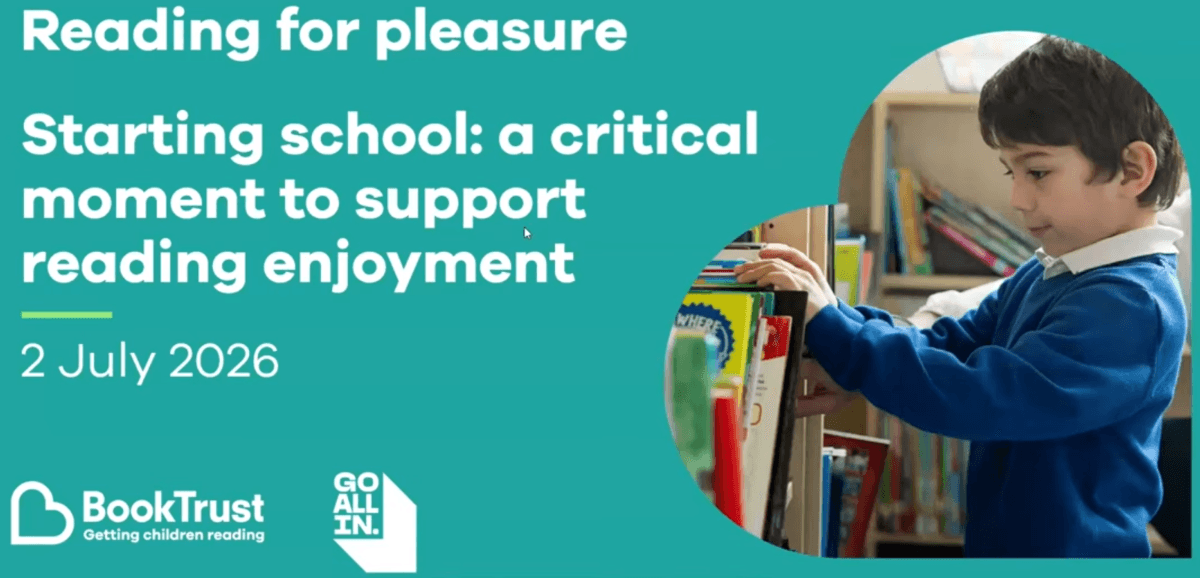
Starting School: A critical moment to support reading enjoyment
Catch up with our webinar about why starting school is a key moment to support reading for pleasure in families. Discover the latest research from BookTrust and hear from author-illustrator Tom Percival and Matthew Courtney, Strategic Lead at Wandle English Hub, about practical strategies for engaging children and families. Discover our evidence-based practice guide here: https://bit.ly/44OvIHb

Anti-Racist Shakespeare Webinars: Henry VIII
In this webinar, scholar Mira Assaf Kafantari and playwright Hannah Khalil discuss trauma, female experience, erasure, queenly power, and immigration in Henry VIII, chaired by Globe Head of Research Dr Will Tosh.
Anti-Racist Shakespeare Webinars: Hamlet
In this webinar, Globe Co-Director of Education (Higher Education and Research) Professor Farah Karim-Cooper is joined by Professor Ian Smith and practitioner Naeem Hayat to discuss humanity, philosophy, and white masculinity in Hamlet.
Anti-Racist Shakespeare Webinars: A Midsummer Night's Dream
In this webinar, Globe Co-Director of Education (Higher Education and Research), Professor Farah Karim-Cooper is joined by performer Aldo Billingslea and scholar Dr Vanessa I. Corredera to discuss language, performance history and culture in A Midsummer Night’s Dream.
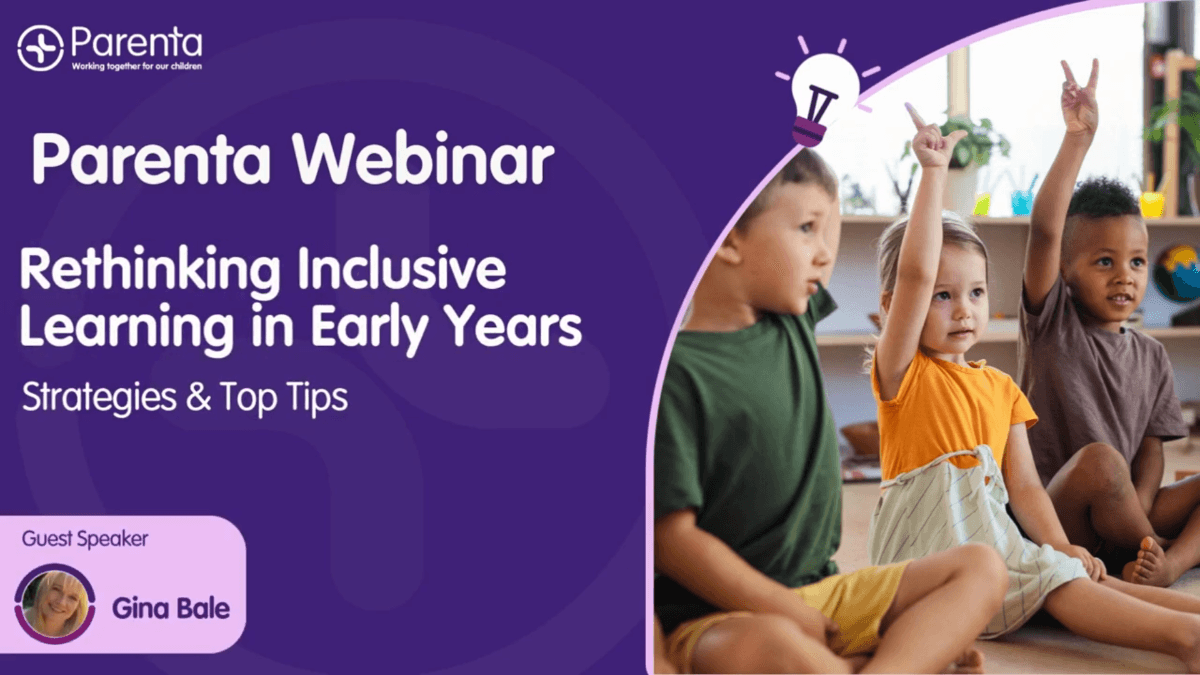
Rethinking Inclusive Learning in Early Years – Strategies & Top Tips
In this inspiring and practical webinar, Gina Bale explores how inclusive, holistic learning helps every child thrive by focusing on possibilities rather than limitations. Drawing on her expertise in movement, music, storytelling and SEND practice, Gina shares simple, creative strategies that can be implemented immediately to build communication, confidence and early literacy through meaningful play. This session demonstrates how observing children's individual interests and strengths can transform everyday activities into rich learning experiences that support communication, problem-solving, language development and inclusion. Ideal for early years practitioners, managers and nursery owners, this webinar offers practical ideas to create engaging environments where every child has the opportunity to succeed. What you'll learn: How movement, music and storytelling create strong foundations for communication and literacy Why observing the whole child leads to more inclusive and effective practice Practical ways to differentiate activities so every child can participate and thrive Simple strategies to build confidence, language and learning through play and meaningful interactions A must-watch for anyone working in early years settings who wants to create truly inclusive learning experiences and help every child spread their wings.
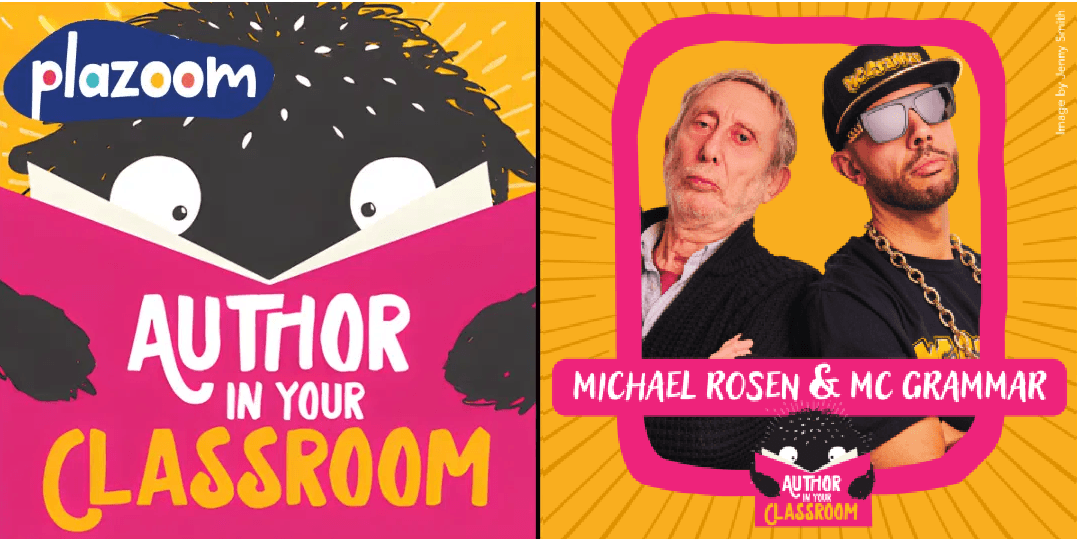
Write a rap with Michael Rosen and MC Grammar
In this brilliantly bonkers episode of AIYC, Michael Rosen and MC Grammar join host Helen Mulley to explore rap, rhyme and collaborative writing, sharing practical ideas to help children fall in love with language. They also talk about their new book, Ridiculous Raps and Rhymes – a hilarious, high-energy rhyming adventure. Using this episode as a foundation, the free accompanying resource pack helps children explore the craft of rap. They’ll think about what makes a great rap or poetry performance, experiment with rhythm and rhyme, and discover how ideas often become stronger when writers work together. Teaching overview The unit begins by exploring the relationship between poetry and rap. Pupils listen to performances by Michael Rosen and MC Grammar, discussing rhythm, rhyme and repetition, and considering how poems and raps use language to create meaning, energy and enjoyment. They also reflect on the similarities and differences between the two forms, thinking about what makes each unique. Pupils then explore performance and collaboration. They consider how expression, pace and rhythm bring words to life, before discussing how Michael Rosen and MC Grammar developed ideas together. Through this, they reflect on the importance of listening, sharing ideas and working creatively with a partner. The next stage focuses on creating original raps. Working in pairs, pupils gather ideas, experiment with words and rhythms aloud, and develop their writing through discussion and rehearsal. They gradually shape and refine their raps, using repetition, rhyme and performance techniques to strengthen their work. The sequence concludes with performance and reflection. Pupils share their raps with others, respond to feedback and consider what they have learned about writing collaboratively, performing confidently and using spoken language creatively, leaving the unit with a deeper appreciation of poetry, rap and the creative writing process.
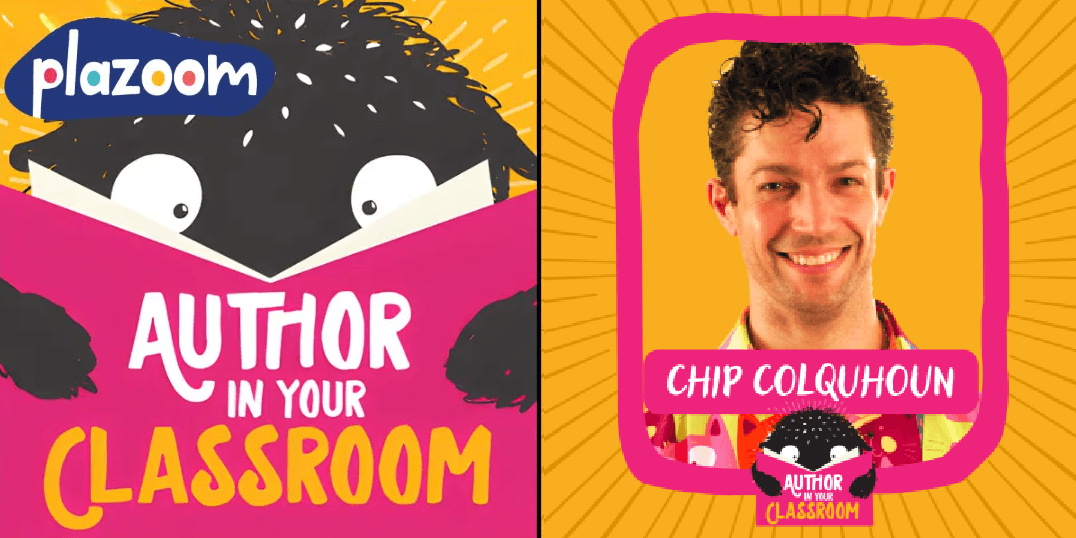
Become a storyteller with Chip Colquhoun
In this set of lessons, author Chip Colquhoun invites KS2 pupils to explore storytelling as something everyone does daily, showing how personal experiences, memories and familiar tales can all become the starting point for original writing. Using an episode of the Author in Your Classroom podcast as a foundation, the resource encourages children to think about what storytelling really is and where ideas come from. Pupils listen to Chip reflect on storytelling as a shared human activity, discuss the stories they encounter in their own lives and consider how writers take inspiration from existing stories to create something new. Teaching overview The unit begins by exploring storytelling as a part of everyday life. Pupils listen to Chip describe how stories are told in many different ways, share their own examples and identify key stories that have shaped their thinking or experiences. They then gather inspiration from a range of sources, including books, films, games and personal memories, building a bank of ideas for their own writing. Pupils then move on to story structure, where they break down familiar narratives into key moments. They use these ‘story beats’ to support planning, adapting known structures to develop their own original ideas while maintaining a clear sense of shape and progression. The next stage focuses on oral rehearsal. Pupils retell their stories aloud, experimenting with expression, rhythm and clarity. Through talking their ideas through, they refine plot details and strengthen their understanding of how stories work in practice. Following this, pupils begin writing their own story or opening. They draw on narrative techniques such as dialogue, description and humour, using their plans as support while making creative choices and improving their work through reflection and peer discussion. Win an author visit from Chip Colquhoun Anyone who pre-orders Bestest Story in the World Ever before 10th September 2026 can enter a draw to win a free school author visit from Chip Colquhoun by uploading their receipt at Epic Tales. 30 schools will win in total, with entries rolling over each month for more chances to win. Buying from a bookshop could double your chances, since bookshops can also nominate schools directly.