
Discover Your Ideal Education Event
Filter by event category, format, subject and educational phase
Showing 12 of 25 events
Creating Dyslexia-Inclusive Schools: A Capacity Building Programme
This two-part course explores key areas for primary schools in supporting pupils with dyslexia and literacy difficulties. This course explores key areas for primary schools in supporting pupils with dyslexia and literacy difficulties. The course aims to build school capacity through: Developing SENCo and English Lead knowledge of dyslexia Exploring appropriate assessment and target-setting approaches Developing effective whole-class strategies through high-quality teaching Coordinating SpLD (dyslexia) provision within school, including the use of appropriate interventions Managing parental and pupil concerns relating to dyslexia Day 1: Thursday 15th October 9:00am to 3:30pm · UK Definition of Dyslexia (New Delphi 2025) Early identification and assessment: formative and summative tools to support schools in identifying pupils with a dyslexic profile and informing reasonable adjustments and provision Exploring the impact of dyslexia on children and young people (CYP) Using assessment information to inform planning and next steps GAP TASK - Assessment Day 2: Thursday 5th November, 9:00am to 3:30pm Dyslexia-Friendly Classrooms: effective high-quality adaptations and the removal of barriers to learning An introduction to targeted and personalised interventions Developing policy and practice, including whole-school ethos and working with parents and external agencies Delegates will receive a toolkit to support implementation of learning and the development of ongoing good practice within school. An audit tool will be used throughout the course to help identify key actions for delegates to take forward on their return to school. Following attendance on both days, delegates will also be given access to CPD materials suitable for a staff meeting. Outcomes Through this training, delegates will: Understand current definitions of dyslexia Use current assessment approaches to support the identification of pupils with SpLD (dyslexia) Understand how to remove barriers so pupils with a profile of dyslexia thrive Use the toolkit to audit current provision and develop an action plan to strengthen capacity and support for pupils with SpLD (dyslexia)

Building and strengthening relationships through peace circles
This immersive session introduces primary school staff to Peacemakers’ interactive approach to circle time. Building and Strengthening Relationships Through Peace Circles This immersive session introduces primary school staff to Peacemakers’ interactive approach to circle time. It introduces circle pedagogy, inclusive activities, explores ways to support social and emotional development, and turns learning into practical, purposeful action. Through our work in hundreds of primary schools, we've learned that it's not just what you teach – it's how you teach it. Peace education delivered in an authoritarian way would undermine its own message. What's needed instead are participative, democratic approaches where children and adults genuinely share the space. Circles are central to our practice. Used by communities across cultures for centuries, circle time creates a space where every voice is heard — including those of quieter or more marginalised children. Passing a talking piece around the circle ensures no one is talked over. Circles can balance power, build empathy, and shift the classroom dynamic in ways that ripple out into the rest of the school day. Within a circle, there's room for games, role play, group and paired discussion, and drama — approaches that children find engaging and memorable. The content of peace education doesn't have to feel worthy or heavy. Done well, it's fun.
Grief & Bereavement Education Training day For Secondary Staff
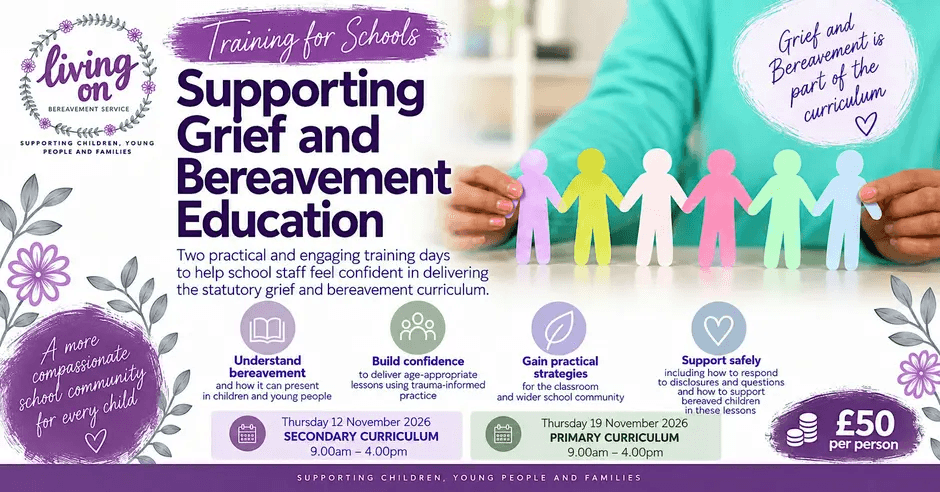
Join us for an engaging & practical training day to help you feel more confident in delivering the statutory Grief & Bereavement lesson Grief and bereavement education is now part of the school curriculum. This practical and engaging training day is designed to help secondary school staff feel confident, informed and equipped to deliver these important lessons safely and sensitively. Delivered by Living On Bereavement Service, a specialist local charity supporting bereaved children, young people and families since 2016, the training draws on over 20 years of experience in childhood bereavement, therapeutic practice and trauma-informed support. The training will help you to: Understand bereavement and how grief can present emotionally, physically, cognitively and behaviourally in young people. Building confidence in delivering age-appropriate lessons using trauma-informed approaches. Gain practical strategies for creating safe spaces for discussion and supporting students through potentially emotional topics. Support safely, including responding to difficult questions and disclosures and recognising when a young person may need additional support. Explore sensitive and inclusive language when talking about death, grief and bereavement. Feel more confident managing emotional responses, difficult questions, disengagement and humour within lessons. Practical resources included You’ll receive practical guidance and resources to support confident and compassionate delivery back in school.

Tackling Misogyny Conference 2026: Strengthening PSHE Curriculums
Join us at the Tackling Misogyny Conference 2026 to hear practical guidance and expert insights into using Personal, Social, Health and Economic (PSHE) education to combat misogyny in schools. The event will feature expert speakers from across education, safeguarding, and the charity sector. Key discussions include developing and delivering tailored PSHE curricula, improving media literacy and tackling online misogyny, and responding effectively to harmful sexual behaviours and attitudes. Why Attend: ✓ Gain practical, classroom-ready strategies to tackle misogyny across PSHE and whole-school practice ✓ Understand and implement the latest RSHE guidance with confidence and impact ✓ Address emerging challenges including AI, online influencers, and incel culture ✓ Networking opportunities with speakers and senior colleagues across the education sector ✓ 8 hours of CPD points towards your yearly quota
Grief and Bereavement Education Training for Primary School Staff
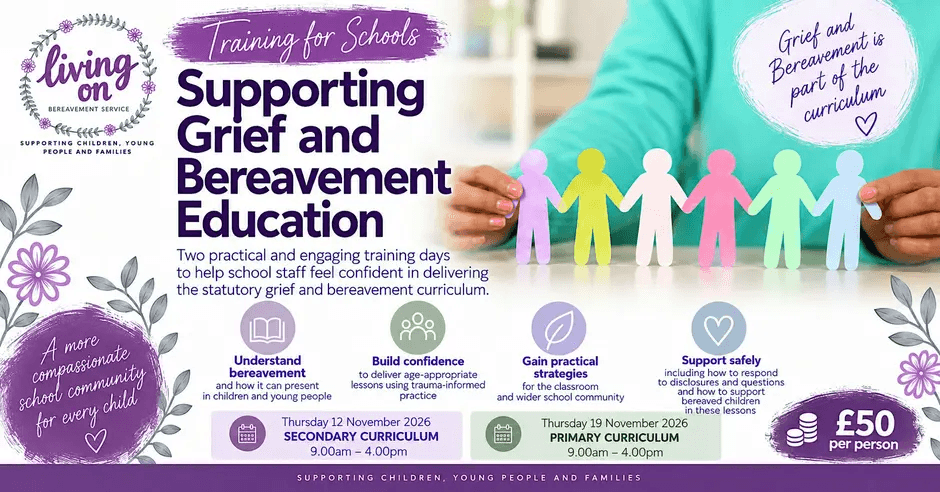
Join us for an engaging and practical training day to help you feel more confident in delivering the statutory Grief & bereavement Lessons Grief and bereavement education is now part of the school curriculum. This practical and engaging training day is designed to help primary school staff feel confident, informed and equipped to deliver these important lessons safely and sensitively. Delivered by Living On Bereavement Service, a specialist local charity supporting bereaved children, young people and families since 2016, the training draws on over 20 years of experience in childhood bereavement, therapeutic practice and trauma-informed support. The training will help you to: Understand bereavement and how grief can present emotionally, physically, cognitively and behaviourally in children. Build confidence in delivering age-appropriate lessons across the primary years, using trauma-informed approaches. Gain practical strategies for creating safe spaces for discussion and supporting children through potentially emotional topics. Support safely, including responding to difficult questions and disclosures and recognising when a child may need additional support. Explore sensitive and inclusive language when talking about death, grief and bereavement. Feel more confident managing emotional responses, difficult questions, disengagement and humour within lessons. Practical resources included You’ll receive practical guidance and resources to support confident and compassionate delivery back in school.
Ofsted Inspection Update - Online
By the end of this course, participants will be able to: Interpret the key components of the new framework. Navigate the updated inspection resources to support workload management for the senior leadership team. Understand inspection timings for the next academic year. Apply best practices for articulating context, safeguarding, inclusion and continuous improvement. Course Content: Work through an overview of the updated structure and rationale of the Framework and Handbook for all phases. Understanding the report card system and how to integrate this into annual school improvement practices. Re-visit successful school improvement strategies to ensure you, your SLT and your Governors are always prepared to talk about your school to visitors Review safeguarding strategies and discuss how to carry out an annual internal safeguarding audit This training course guides you through the re-designed Ofsted Inspection Framework and report card model. Participants will gain clarity on the structure, methodology and assessment criteria and receive practical strategies for preparing the senior leadership team and governors.

Sustainability in Education Conference Kent
For Primary, Secondary and Further Education Leads, Teachers, School Improvement Directors, Operations/Facilities Directors & Governors. “all education settings will have nominated a sustainability lead and put in place a climate action plan”. The Department for Education's (DfE)’s sustainability and climate change strategy. Join school leaders, teachers, and support staff from across the East of England for a dynamic day of inspiration, collaboration, and practical action. This conference brings together national and regional experts in sustainability in education to help schools deliver on their climate action plans. Through keynote speeches and hands-on workshops, participants will explore ways to adapt school operations through effective leadership for sustainability, boost nature recovery & connection and effectively embed climate & social justice into their curriculum. Discover real-world case studies and leave equipped to lead meaningful change in your school community. ***Early bird discounts available*** Standard price £100 per person (schools & college) or £50 before 17 July £75 before 23 October £200 per person (non-educational institute) If you are interested in exhibiting at the conference, please contact The Science Hub at sciencehub@hertsandessex.herts.sch.uk
Beyond Identification: High-Quality Inclusive Practice in FES/Apprenticeships
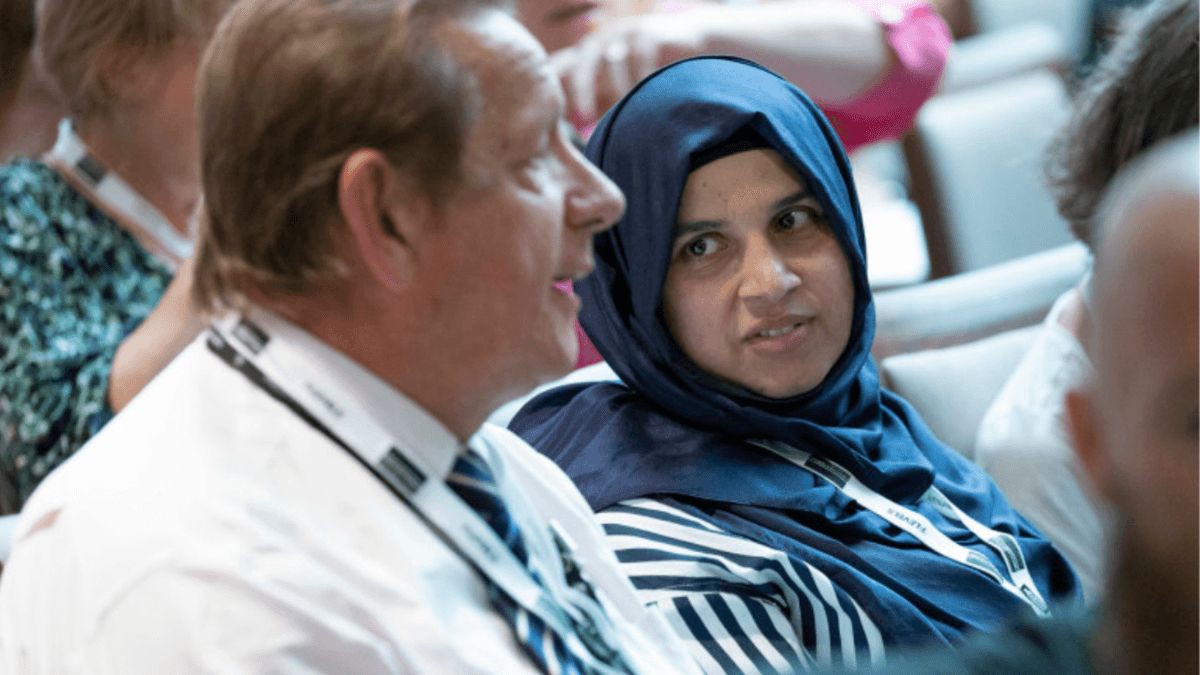
The second webinar in our Learning Without Barriers mini-series, this focused 1 hour session will explore inclusion, moving beyond identification into skilled, intentional responses to barriers in learning and work. Delivered by Dr Barbara Van Der Eecken, the session helps practitioners recognise how SEND, neurodivergence, mental ill health and situational factors present in different learning environments and introduces high quality coaching approaches that support confidence, regulation and progress. Aim of Event During the webinar, we will: Deepen understanding of how SEND, neurodivergence, mental ill health and situational barriers show up in classroom, virtual and workplace learning Recognise subtle early signs of cognitive load, overwhelm, anxiety, executive functioning challenges and situational pressures Apply trauma-informed principles to shape supporting learning and coaching environments Strengthen coaching conversations rooted in curiosity, clarity and psychological safety to support learner motivation, regulation and follow-through Develop confident, intentional responses to barriers that improve learner experience, engagement and progress

Neuroinclusive Workplaces: Supporting Wellbeing at Work
Neurodiversity is a valuable part of every workplace, bringing different perspectives, strengths and ways of thinking. This webinar explores the relationship between neurodiversity, wellbeing and inclusion, helping participants understand the factors that can support or hinder people at work. Through practical examples and reflection, staff and leaders will consider how to create environments where everyone feels valued, supported and able to thrive. Aim of Event Understand the relationship between neurodiversity, wellbeing and workplace experiences. Recognise how workplace culture, practices and environments can impact the wellbeing and success of neurodivergent colleagues. Identify practical actions that staff and leaders can take to create more inclusive, supportive and psychologically safe workplaces.
Thriving, Not Surviving: Leadership and Staff Well-being in Schools
A practical, solution-focused session to reduce stress, prevent burnout and improve leadership and staff well-being. Learn realistic strategies to manage workload, build resilience and create a healthier, more sustainable school culture sustainable, supported workforce. Keep yourself well in the job. Reduce burnout, retain staff and use practical strategies to reduce pressure, prevent burnout and build a sustainable, supported workforce.
South West Inclusion and Belonging Summit
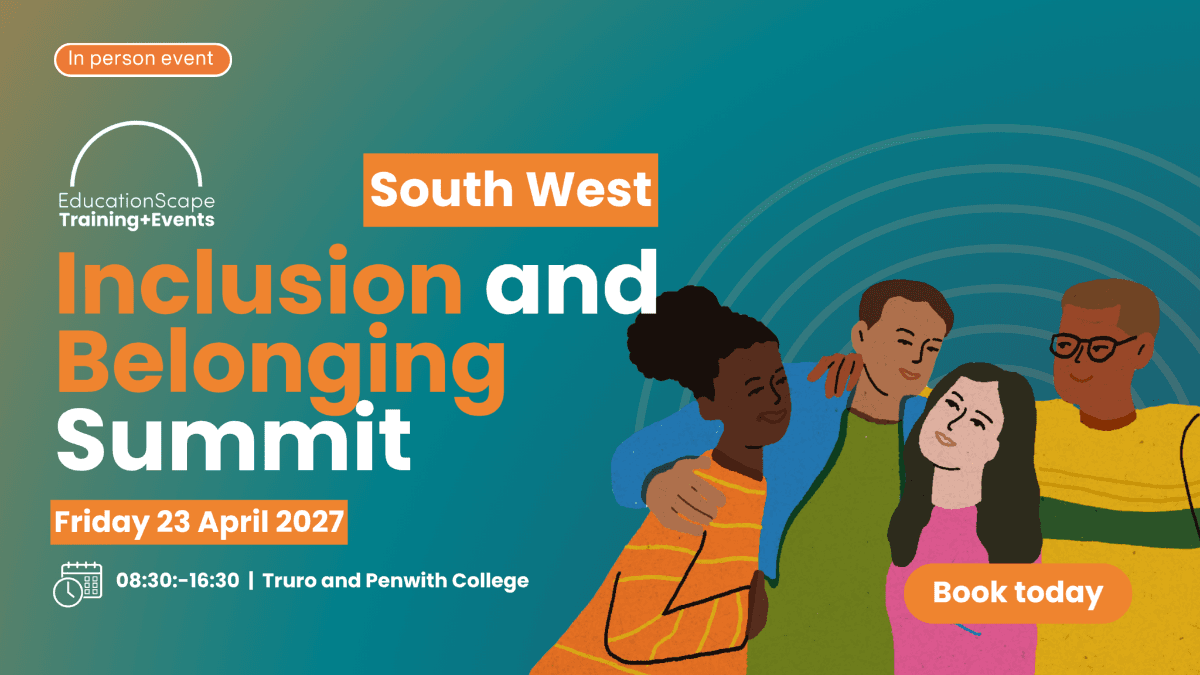
Save the Date for EducationScape’s South West Inclusion and Belonging Summit Following the success of our previous summit, don’t miss your opportunity to join us for this flagship event designed for school and college leaders, educators, support staff, and apprenticeship providers. Designed to help you translate inclusive vision into measurable impact, this summit is closely aligned with current regulatory guidance. It focuses on meeting the needs of all learners and embedding a culture of true belonging across primary, secondary, post-16, and apprenticeship provision. It offers an opportunity to learn directly from practitioners, specialists, and national experts. You will gain evidence-informed, practical insights that ensure your delivery across both classroom and workplace settings provides high-quality education, strong personal development, and positive outcomes for every learner. Why this summit matters now Meeting regulatory requirements and national guidance is vital, but true impact goes far beyond compliance. Today’s providers must demonstrate how inclusion, culture, and learner wellbeing are embedded across every level of delivery. This summit offers a dedicated space to reflect, collaborate, and address key challenges: Defining Belonging: What does a genuinely inclusive setting look like across classroom and wor-based environments? Driving Outcomes: How do inclusive cultures systematically improve attendance, behaviour, and academic achievement? Sustaining Engagement: How do we protect vulnerable learners during key transition points? By focusing on belonging as a driver of success, this event supports you in creating spaces where all learners can build confidence, stay engaged, and achieve their full potential.

The Neuroscience of Feeling ‘At Home’: Why mattering supports belonging and wellbeing
What is the webinar about? Children’s Mental Health Week 2026 theme, This Is My Place , invites us to notice the moments that help children feel emotionally “at home” in school. Research shows that one of the strongest drivers of this feeling is mattering - the sense of being noticed, valued and significant. When children feel they matter, their brains are more able to regulate, connect and engage with learning. But what does mattering look like in everyday practice? And how does it support a deeper sense of belonging and wellbeing? Join Thrive’s Viv Trask-Hall and Laura Nicholson alongside Victoria White, Trust Leader Quality of Education, at The Consortium Academy Trust, as they explore how emotional safety, mattering and relational practice work together to help children feel settled and secure. They unpack the science behind these ideas and link it directly to what educators see in real classrooms. You’ll leave with clear insights, practical reassurance and renewed confidence.