
Discover Your Ideal Education Event
Filter by event category, format, subject and educational phase
Showing 12 of 33 events

Effective leadership of primary maths
Come along to this 4-part live webinar CPD where you will be supported in everything you need to deliver effective maths leadership. Audience: School leaders Subject: Primary maths Topics: Analysis and use of assessments, Knowledge of the curriculum, Knowledge of your subject field, School leadership, Student assessment practices Are you new to the role of maths leader? Do you want to have a meaningful impact but aren’t sure where to start? Come along to this 4-part live webinar CPD where you will be supported in everything you need to deliver effective maths leadership. Session 1 – Identifying change Thursday 10 September 2026, 3:45pm – 4:45pm We will start by exploring the role of the maths leader and provide strategies to effectively support and address your school's unique needs. This session will guide you through the process of identifying those needs, ensuring you are equipped to drive meaningful change and enhance mathematical learning within your school. Session 2 – Action planning and implementing change Thursday 8 October 2026, 3:45pm – 4:45pm In this session, we will map out effective strategies for driving necessary change, set realistic targets, and address potential barriers. Gain practical insights and tools to ensure successful implementation and foster a culture of continuous improvement in maths education at your school. Session 3 – Planning a staff meeting Thursday 12 Novemver 2026, 3:45pm – 4:45pm What does an effective maths staff meeting look like? We will support you in designing CPD tailored to the specific needs of your school. Session 4 – Monitoring and driving forward Thursday 28 January 2027, 3:45pm – 4:45pm Evaluate the impact of your staff meeting and identify the next steps for continued improvement. In this session, we will explore methods to continuously enhance the teaching and learning of maths through a cycle of effective leadership. Learn how to sustain progress and drive ongoing success in your school's maths program. Purchasing via Webinar Tokens? This session costs 20 tokens per ticket, please follow the link below to book your tickets now https://forms.monday.com/forms/db48eeb6d0df94f13c5e3575e33312e4?r=euc1 THIS WEBINAR IS A LIVE EVENT AND WILL NOT BE RECORDED. PLEASE DO NOT MAKE A BOOKING ON THE BASIS OF VIEWING THE SESSION LATER AS THIS IS NOT POSSIBLE.
Online CPD: Teaching Macbeth at Key Stage 4
Join this Continuing Professional Development session to enhance your classroom teaching of Shakespeare’s epic tragedy Macbeth at Key Stage 4. Aimed at Secondary English and Drama teachers, it will offer exciting techniques to engage with Shakespeare through active and creative approaches in the classroom. It provides teachers with a range of exciting activities to share with students to deepen their understanding of the play’s characters, context, themes and imagery, and develop their critical thinking skills. You’ll gain: Dynamic techniques to get students to actively engage with the play and perform Shakespeare’s words, on their feet or at their desks Tools to help students to critically analyse his language, including use of verse and prose Skills in articulating different interpretations of the text Confidence to facilitate discussions around key themes and different interpretations, especially in contemporary contexts The chance to share ideas and challenges with other teachers This session has been developed for English teachers, with a particular focus on Key Stage 4. Techniques support assessment objectives AO1, AO2 and AO3. Your Online CPD session includes: A two hour Zoom workshop led by an expert Globe Education Practitioner A take-away session plan to help you embed your learning in the classroom
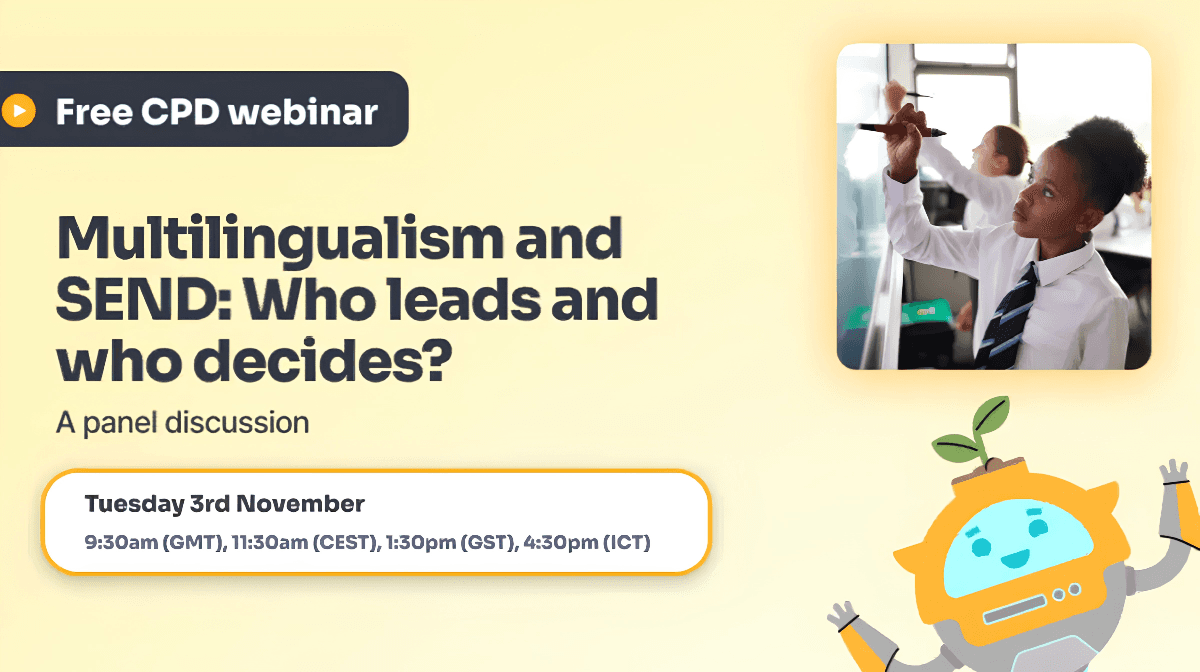
Multilingualism and SEND: Who leads and who decides?
How do I know if my multilingual learners have SEND or if they’re “just catching up?” And whose role is it to find out? Join us for this panel webinar as experienced multilingualism and SEND specialists from UK and international schools explore how schools can build clear, collaborative processes around this decision. Getting it right depends on each member of the team around the learner working together at the right moments. This session looks at how to design that process. Attendees will leave with: Clarity on which roles should be involved at each stage, from initial concern through to a formal decision Practical approaches for sharing information between multilingualism and SEND leads Greater confidence in building a whole-school process that supports earlier and more accurate identification

Digital leaders programme
Dates: 03 November, 05 November, 10 November, 12 November, 17 November, 19 November, 24 November, 26 November 2026 The online programme is made up of eight sessions, usually on Tuesdays (10:00-12:00) and Thursdays (14:00-16:00). Our programme for aspiring and current digital leaders returns next year, and we're offering a new format to support different learning preferences and provide more flexibility. What to expect This course offers a variety of sessions and exercises to help you develop as a digital leader. It is designed for current and aspiring leaders in further and higher education organisation regardless of discipline, function or department who wish to develop their digital leadership skills or have an interest in digital transformation. You'll collaborate with like-minded peers to explore the tools needed for effective leadership in the digital era. The programme equips you with the skills to lead and manage digitally-driven transformations across all levels of an organisation. You'll gain insights into how digital technology is changing organisational dynamics, explore a variety of challenges and opportunities that digital leaders encounter and learn useful techniques and strategies to influence change and lead effective digital transformation in your organisation. Training outcomes By the end of the programme you will be able to: Define digital leadership and explore what makes an effective digital leader Outline and visualise your organisation’s digital practice Align digital strategy with organisational goals Assess the impact of emerging new technologies on your organisation Use data and stories to communicate digital transformation Explore and examine different approaches to digital transformation Apply change management models and techniques to embed and anchor change in your organisation Foster a culture of innovation through digital leadership By taking part in this course, you can also earn digital credentials to show your achievement. A key feature of the programme is the opportunity to connect and network with other digital leaders, participants are encouraged to join our free online digital leadership and culture forum.
School Finance for Senior Leaders
In this comprehensive on-line training, we will break down the key components of school finance and provide you with the knowledge and tools you need to navigate this critical area effectively. This course begins with back to basics information to support the Headteacher and School Business Leader to develop the necessary skills to analyse and evaluate financial information and prepare the correct level of information for the governing body. We then move on to look at strategies and best practice to maximise efficiencies and either prevent schools going into deficit or bring a school back to a neutral financial position by developing a financial recovery plan.

Identifying Needs and Provision for SEND Students
Join us for this one-day virtual masterclass for an indepth look at how to identify pupil needs and put in place and monitor effective interventions. There has been a significant increase in the number of children and young people with complex needs now attending our mainstream schools. This has resulted in a difficulty in SENCOs and teachers being able to identify individual needs and put in place appropriate interventions. Alongside this is the difficulty that schools have to engage Education Psychologists and other professionals to support this identification process. The four broad areas of need as laid out in the SEND Code of Practice (2015) and the descriptions used in the school census do not adequately describe some of the needs of these complex learners. During this session, Lorraine will explain some of the difficulties schools are having with this identification process and offer support and advice in. KEY LEARNING OBJECTIVES To develop a greater understanding of how to identify children with special educational needs and disabilities To offer support and guidance on interventions that might be used to support SEND To offer support and guidance on monitoring interventions, including impact and outcomes for learners. FACILITATOR Lorraine Petersen has 25 years’ experience in the mainstream school environment as a Teacher and Headteacher. From 2004 – 2013 Lorraine was CEO of NASEN, a charitable organisation supporting all those who work with children and young people with SEND. She worked on a number of projects with various agencies including the Department for Education, the National College of Teaching and Leadership & UKTI, not to mention being a chair, keynote speaker & workshop facilitator at numerous national & international events and conferences.

School Governance, for trustees, school governors and school leaders
Governance training that goes beyond a basic induction. This half-day session will give you a clear overview of school governance, whilst deepening your understanding of what healthy school governance looks like. School governance is an essential layer within our education sector and single school governors and school group trustees make up the largest group of volunteers in the UK (excepting Scotland). This masterclass will equip those taking on the role to contribute from the start, to gain confidence in the work they will be doing, and to deepen their understanding of how governance underpins the success of the institutions they support. There will be content on the varying accountability mechanisms within the sector, such as Ofsted, and guidance on how to work strategically to ensure the long term success of schools. School governance is collegiate and therefore the session will also be highly suitable for school leaders and governance leads. Governance does not happen in isolation and aspiring and experienced leaders, governance clerks, trustees and system leaders will benefit hugely from the content which will explore effective schemes of delegation, the art of productive meetings, pitfalls to avoid and examples of good practice. By the end of this masterclass you will be able to: Understand where governance sits within the education sector Consider what healthy governance activity looks like within school Learn how governance can make a positive difference and how it can go wrong Explore the strategic nature of school governance Reflect on the collegiate nature of school governance and the interplay between leaders and governors FACILITATOR Rebecca Leek has been a teacher, Senco, Headteacher and CEO. She is currently the Executive Director of the Suffolk Primary Headteachers’ Association, undertakes external governance review work and works extensively across the governance sector as a writer, mentor, trainer and speaker. She is the author of the book, The School-Ready Governor, is a trustee for a charity, and is a member for a multi-academy trust.
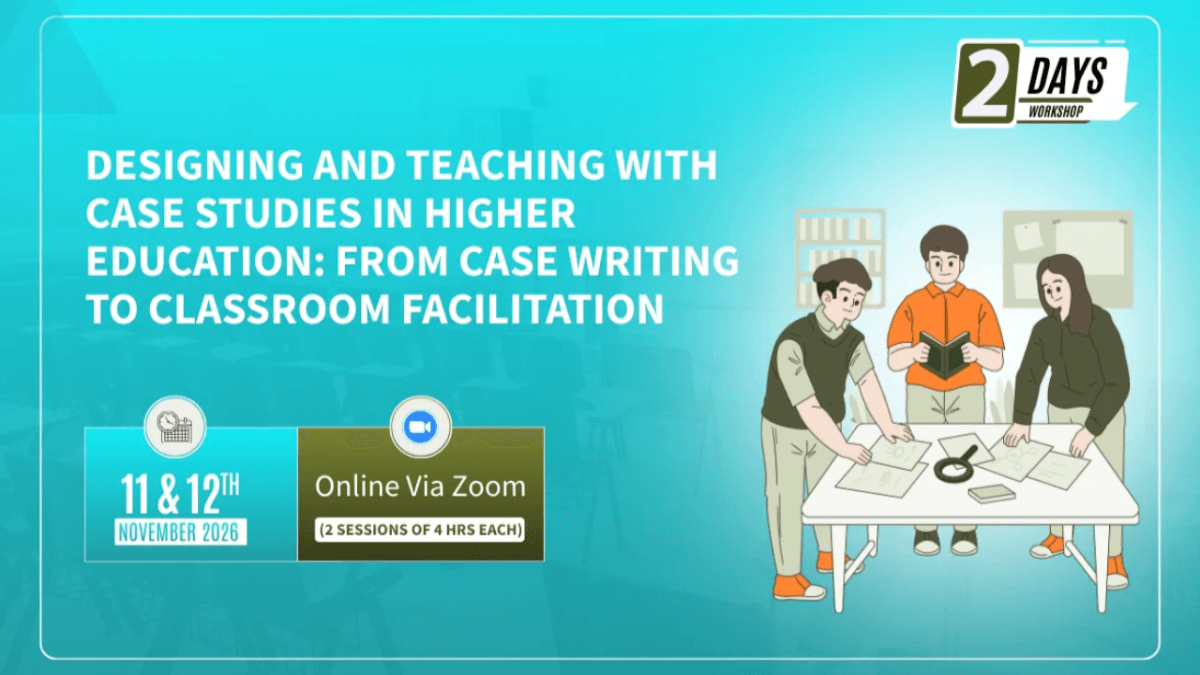
Designing and Teaching with Case Studies in Higher Education
Case studies have become a powerful pedagogical approach for bridging theory and practice, fostering critical thinking, enhancing learner engagement, and preparing students for the complexities of professional practice. However, effective case-based education requires not only the ability to write high-quality teaching cases, but also the pedagogical expertise to facilitate meaningful case discussions and design impactful learning experiences around them. This two-part online workshop—jointly delivered by CLICKS and Emerald Publishing—provides higher education faculty with a comprehensive and practical introduction to both writing teaching case studies and teaching effectively with cases. Drawing on internationally recognized editorial and pedagogical standards, the workshop guides participants through the full case-based learning cycle: from identifying and developing compelling teaching cases to facilitating inclusive discussions, aligning cases with learning outcomes, and assessing student learning. Across two interactive 4-hour sessions, participants will explore how case-based learning can strengthen employability, active learning, critical thinking, authentic learning, problem-solving, decision-making, and reflective practice across disciplines and delivery modes. The workshop will include short practical exercises, peer discussion, critique activities, and guided application tasks to support participants in developing and applying case-based teaching and writing skills.

The Independent School SENCO
This essential masterclass provides delegates with an essential overview of the role of the SENCO in independent settings. You will come away with practical tools, tips, strategies and resources to take back to your school and implement straight away. The role of the SENCO in an independent school comes with significant pressures and challenges. Figures show that over 17% of all ISC pupils require SEND support and it is vital that independent schools can meet the individual needs of these pupils. While the SEN Code of Practice does not apply, having a consistent and robust approach is key. Join us for this one-day virtual masterclass for a detailed look at the role of the SENCO in Independent schools. Our expert speaker will take you through your legal requirements to ensure that you are compliant, whilst signposting you to useful resources. You will also look at the EHCP and admissions process and how they might differ for your setting. You will be able to audit your identification, referral and diagnosis process and procedures to ensure they effective, as well as consider how best to support individual pupils. You will consider your leadership of SEND, how you can work strategically and prepare for inspection. During the course of the day, you will have plenty of time to network with colleagues, discuss specific challenges and put your questions to Lorraine. Key Learning Objectives This Masterclass will enable you to: Explore the legal responsibilities for an independent SENCO Understand the EHCP process for independent provisions Put processes and procedures in place to identify pupils with SEN in your setting Effectively implement support for individual pupil Improve how you work with parents to improve support for children Provide outstanding leadership in your role as SENCO Raise awareness of SEND across your school and understand what staff training maybe required Prepare yourself and your setting for inspection of SEND provision

Introducing Cambridge OCR's new A Level Psychology - 12th November 2026
Join us for a free introduction to our new A Level Psychology (H569), now accredited and ready for teaching from September 2027. Hosted by our expert subject advisor, this session will focus on: - the highlights of our specification and assessments, including what’s new - the benefits of our qualification for you and your students - the support and resources available to help you teach with confidence. There will also be an opportunity for you to ask any questions you may have. Please contact CustomerDevelopment@cambridge.org with any questions ahead of the event or if you have any problems joining on the day. We look forward to seeing you there!

Virtual Get into Teaching Event
Step into a community committed to transforming education. Join members of the Equalitas programme team for an online introduction to our Primary and Secondary Teacher Training programmes. We’ll share clear, practical advice on securing your first teacher training placement, walk you through our rigorous and supportive course journey, and explore what it means to be part of a profession that truly shapes futures. This is your opportunity to connect with experts, ask questions, and take a decisive step towards becoming the teacher you aspire to be.

Tackling Misogyny Conference 2026: Strengthening PSHE Curriculums
Join us at the Tackling Misogyny Conference 2026 to hear practical guidance and expert insights into using Personal, Social, Health and Economic (PSHE) education to combat misogyny in schools. The event will feature expert speakers from across education, safeguarding, and the charity sector. Key discussions include developing and delivering tailored PSHE curricula, improving media literacy and tackling online misogyny, and responding effectively to harmful sexual behaviours and attitudes. Why Attend: ✓ Gain practical, classroom-ready strategies to tackle misogyny across PSHE and whole-school practice ✓ Understand and implement the latest RSHE guidance with confidence and impact ✓ Address emerging challenges including AI, online influencers, and incel culture ✓ Networking opportunities with speakers and senior colleagues across the education sector ✓ 8 hours of CPD points towards your yearly quota