
Purposeful assessment
About This Event
In the sixth session of the free CODE learning and teaching webinar series, we will explore how we can design assessments that have purpose: to both measure whether students have met their learning outcomes, and also act as a learning opportunity in themselves.
We will consider how the purpose of assessment can be to encourage not only learning, but also creativity and criticality, and what this might look like across different disciplines or institutions. How can we do this in the context of GenAI where students might be less motivated to focus on their own thoughts or responses in fear of getting it wrong, or in a situation when they feel too time-poor to successfully complete assessment? This session will explore some answers and approaches to this wicked problem.
Purposeful assessment also needs to enable compassion and inclusivity, to ensure that all students feel able to get the most out of assessment opportunity - so these considerations will also be foregrounded during the session.
Speakers

Anja Harrison
Applied Neuroscience programme lead
King's College London

Anthony Harrison
Director of The Collaborative Library (TCL) and a Clinical Psychologist

Dr Kay Sidebottom
Lecturer
University of Stirling
Related Events

Making testing more creative and authentic
Speaker Paula Asad Session information Have you ever felt overwhelmed by stacks of test papers, questioning whether they truly reflect what your learners know or can do? In this practical webinar, we reimagine traditional testing and explore creative strategies to help learners authentically demonstrate their learning. Discover how to use whiteboards and exit tickets for instant feedback, how to apply teach-back methods to deepen understanding and how to design authentic assessments that foster higher-order thinking.

AI and wellbeing: what schools are noticing and why it matters
What is the webinar about? Children and young people are growing up alongside AI tools that respond instantly, adapt to them, and feel surprisingly conversational. These moments can spark curiosity and connection, but they also introduce pressures that may shape how young people feel, relate and regulate - and the pace of change is faster than our understanding of its emotional impact. Join us for a fireside conversation where Thrive’s Viv Trask-Hall is joined by digital education specialist, Anthony Magee, and Safeguarding and Mental Health GLF Trust Lead, Fiona Jarman, to explore the emerging ways AI is shaping children’s emotional and social worlds, and how schools can respond. You’ll gain a high-level understanding of the emerging impact of AI, drawing on data and behavioural insights, alongside relational perspectives on supporting young people’s wellbeing as technology evolves.
If technology is so clever, why are teachers so busy?
Are today’s classroom technologies really making teachers’ lives easier? In this episode of Teachwire Talks, Helen Mulley is joined by Ashleigh Kennedy from Dell Technologies and product marketing consultant Richi Fontaine to explore whether edtech is living up to its promise. Together, they discuss how technology has transformed schools, from interactive whiteboards to AI, and examine why workload remains such a challenge, even as new tools continue to emerge. Finally, they share practical insights into using digital tools more strategically, helping you save time while improving teaching and learning. About ED360 Teachers are under growing pressure to manage heavier workloads, respond to diverse student needs, close learning gaps, and confidently adopt new digital and AI-enabled approaches in the classroom. To support them effectively, schools need practical tools and accessible professional learning that can make an immediate difference. A clear next step is to register to join ED360 – Dell’s hub for smarter teaching – where educators can explore practical ideas, tackle common challenges, and see how modern technology and AI can support teaching and learning. The platform includes webinars, podcasts, classroom-ready resources, and expert-led content designed to help schools embrace future-ready IT and bring AI-driven learning into the classroom. Alongside ED360, educators can also benefit from other valuable resources such as Microsoft Learning Zone and Intel Skills for Innovation. Intel Skills for Innovation helps educators integrate technology into everyday learning through ready-to-use lesson plans, professional development, and real-world projects that build digital, problem-solving, and innovation skills. Microsoft Learning Zone is an AI-powered education app from Microsoft designed to help teachers create interactive lessons and learning activities more quickly. Register to join ED360 here . By encouraging teachers and school leaders to engage with ED360 and these wider resources, we can help reduce pressure, build confidence, and give educators practical support to create more engaging, inclusive, and future-ready learning experiences.

Episode 4 - Defunded Not Derailed: Alternatives for Level 3 Computing, IT and Cyber Security Quals
Episode Date: Thursday 2nd April 2026 Computing, IT and cyber security is one of the fastest-moving areas in post-16 education, and one of the most directly affected by qualification reform. As large applied qualifications are phased out, colleges delivering digital programmes must rethink how they structure provision to meet both learner needs and an industry that evolves by the month. In Episode Four of Defunded, Not Derailed, we move from science to digital, applying the same subject-specific lens to explore what strong Level 3 computing, IT and cyber security provision looks like from here. What qualification alternatives are available? How can colleges design programmes that keep pace with rapid industry change? And what role might V Levels and mixed study programmes play in shaping digital pathways? Gavin O'Meara is joined by Vinay Thawait, Subject Advisor at Cambridge OCR, Aman Purewal from Coventry College, and Kris Hyde from Callywith College, to explore how digital specialists are navigating reform and what curriculum leaders should be considering now. Defunded Not Derailed was produced by FE News in partnership with Cambridge OCR.
Let me hear the real you!
In this webinar, David Byrne and Mark Heffernan will explore the importance of discussing voice and persona with learners. With the development of AI, it’s become even more important for learners to know their voice, to know how they want to come across, and to stand out from AI generated content. This content is available to Modern English Teacher subscribers.
On-demand webinar: AI Black Box: responsible use for primary teachers
Webinar series: AI in Primary History Session 4: AI Black Box: responsible use for primary teachers Presenter: Dr Vanessa Cui, Dr Louise Wheatcroft, Dr Jordan Bird Generative AI offers incredible potential for resource creation for teachers, but the current dominant generative AI tools' core function is to be an agreeable, helpful assistant. This often leads to oversimplified narratives and a lack of necessary nuance and criticality, not to mention the common ethical challenges generative AI tools present such as bias, inaccuracy and environmental impact. These challenges potentially can compromise the quality of teaching materials and the ethics of teachers' practice. This focused 60-minute session is designed to inform teachers about principles of how dominant Generative AI models function, including the crucial role of Alignment (training on human preference) in the way generative AI responds to human inputs with the aim to empower teachers to confidently understand, evaluate, and responsibly use generative AI tools across their professional practice. This session includes: Understanding agreement: explain the principle of alignment (human preference training) to teachers and why it causes AI to avoid complexity, challenge, and conflicting evidence. The criticality challenge: evaluate the key pitfalls of using AI for history — including historical bias, presentism, and factual hallucinations — and learn to spot them. The CLEAR Prompting Framework: you will gain an actionable framework designed for more critical engagement with dominant generative AI tool and consider its use in your practice. Action plan for responsible use: leave with a concrete plan, identifying up to three actions you can responsibly integrate AI into your professional practice, including the necessary steps for safe and ethical implementation in your school. Non-member instant-access price: £45.00 HA Members can get instant access for £30.00

How can assessment be inclusive?
Speaker Nashwa Aly Muhammad Session information This practical session addresses the limitations of one-size-fits-all assessments. It explores the positive impact of creating equitable opportunities for all learners, including those with special educational needs, while catering to cultural differences and varied learning preferences. Learn about the key principles of accessible and inclusive assessment and how to integrate these to accommodate diverse needs, by providing alternative testing formats and designing fair and unbiased assessments.
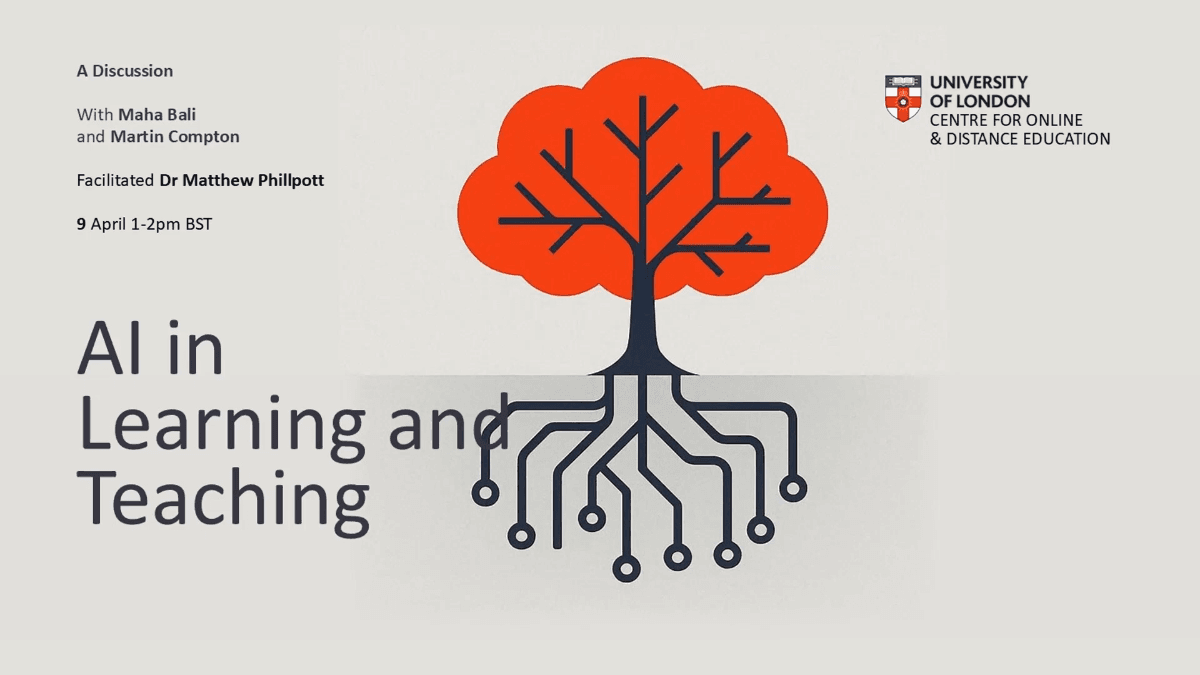
AI in learning & teaching
Explore the transformative impact of AI tools on higher education, with discussions on practical applications, ethical concerns, and the evolving role of educators in an AI-enabled world. In the fifth session of the free CODE learning and teaching webinar series , we will explore the positive and challenging impact on learning and teaching in Higher Education by Gen AI tools. In particular, we will discuss practical applications of using AI-powered systems in the curriculum and how these can enhance learning and teaching while also considering the concerns, issues around equity and privacy, and how the role of the educator needs to evolve to prepare students for an AI-enabled world. The session will draw from recent UK case studies and international best practices.
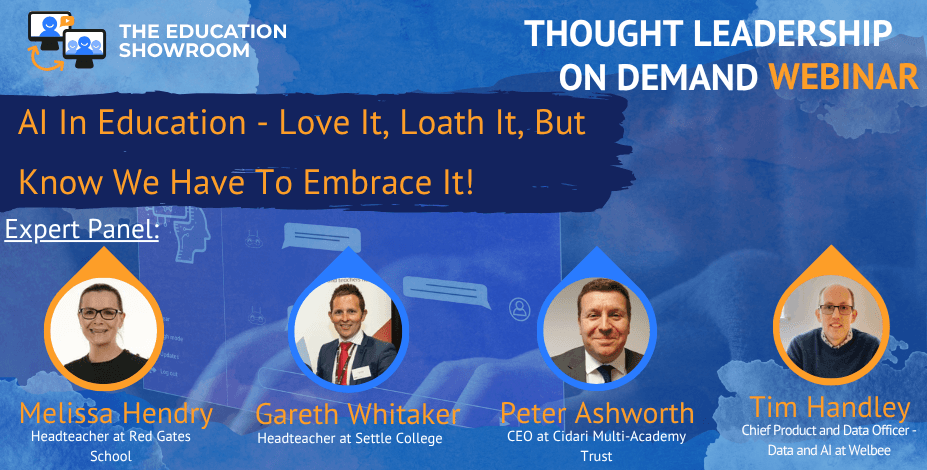
AI In Education – Love It, Loath It, But Know We Have To Embrace It!
Release Date: Wednesday 24th September, 2025 Hear from our expert panel of school and MAT senior leaders regarding all things AI including the challenges, benefits and how they are embracing AI in their schools and across MATs.
Webinar: KS3 - The intellectual powerhouse of the secondary school
Too often, KS3 is seen as a warm-up for the 'real' work of KS4. But what if it’s actually the engine room of thinking, curiosity, and confidence? In this session, Mary talks with Steve Willshaw and Alex Fairlamb about the research supporting a more demanding offer for pupils at Key Stage 3.
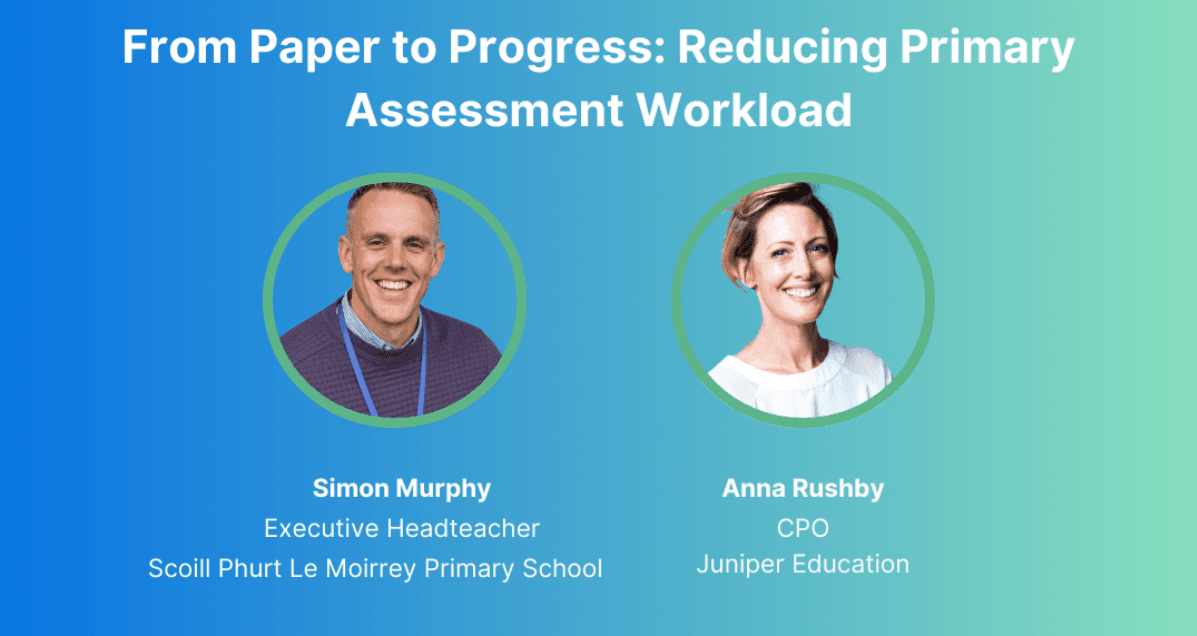
From paper to progress: Reducing primary assessment workload
In this webinar, Simon Murphy, Executive Headteacher at Scoill Phurt Le Moireey School, joins Anna Rushby, Chief Product Officer at Juniper Education, to share how his primary school changed its approach to assessment tracking. You’ll hear the practical steps taken to reduce admin, introduce new ways of working, and give teachers more time to focus on pupil progress. A real account of leading change in a school, including what worked and what they would do differently.
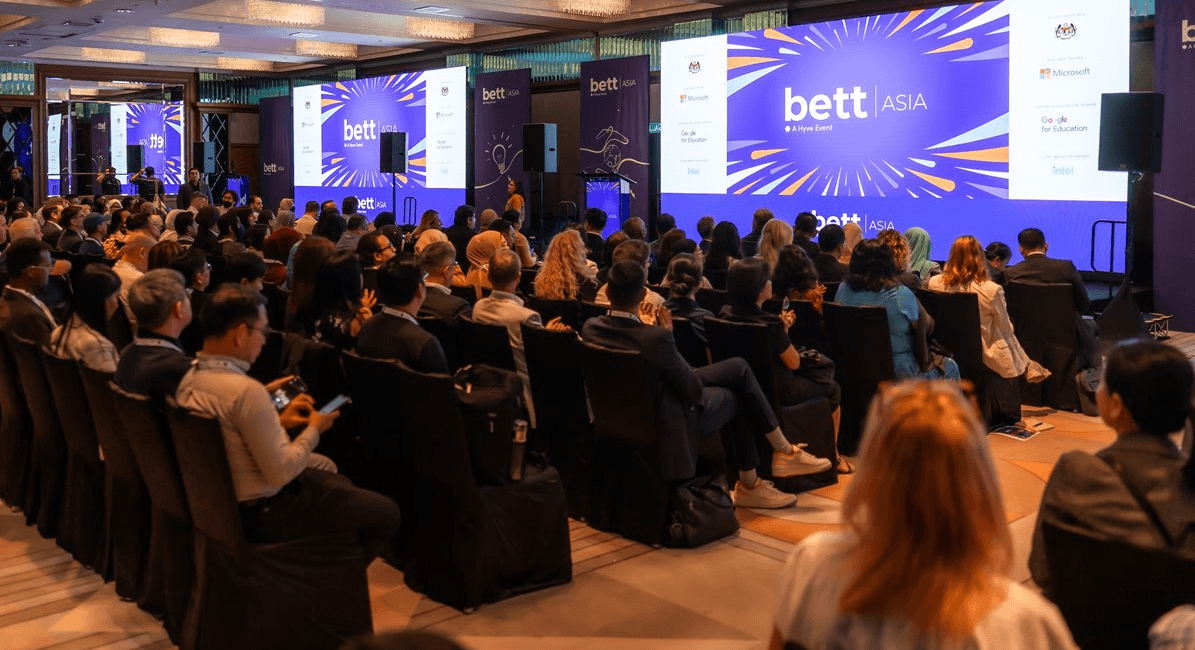
BETT Asia 2026
Bett Asia is one of the Asia-Pacific region’s leading education technology events, bringing together educators, government leaders, innovators, and EdTech providers to explore the future of learning. Hosted in Kuala Lumpur, the event features an interactive expo showcasing cutting-edge teaching and learning solutions, alongside leadership summits, hands-on Tech User Labs, networking sessions, and expert-led discussions. Bett Asia provides a unique platform for discovering new classroom technologies, sharing best practices, and connecting with decision-makers shaping education across the region. Opening times - Malaysia Time 23 September 2026 Exhibition: 09:00 – 18:00 Conference: 08:45 – 17:00 24 September 2026 Exhibition: 09:00 – 17:00 Conference: 09:00 – 15:30