

Adaptive Teaching in Practice – Meeting Every Child’s Needs
Wednesday, December 2, 2026
Date
4:00 PM - 5:00 PM
Time
Online
Location
Free
Cost
About This Event
Discover how adaptive teaching can support every pupil in the primary classroom. In this webinar replay, Marie Thornby explores inclusive teaching strategies, and responsive approaches to adapt learning to help every pupil work towards the same ambitious learning goal.
How can adaptive teaching help every pupil access learning, make progress and achieve their potential in the primary classroom?
Adaptive teaching is about recognising and responding to pupils' different needs while maintaining high expectations for everyone. Rather than planning separate activities for different groups, it focuses on adapting teaching, support and resources to help all pupils access learning and make progress.
Join us for this practical webinar exploring what adaptive teaching looks like in the primary classroom, how it differs from traditional differentiation and how teachers can use it to support inclusive learning across the curriculum.
In this webinar, you'll discover how to:
Use clear learning goals and formative assessment to respond to pupils' different needs.
Identify barriers to learning and make purposeful adaptations that help every pupil make progress.
Explore practical, inclusive teaching strategies, with classroom examples from science, D&T, PSHE and more.
Drawing on research from the Education Endowment Foundation (EEF), Rosenshine’s Principles of Instruction and cognitive load theory, this session will offer practical, evidence-informed guidance, whether you're new to adaptive teaching or looking to develop your existing practice.
Related Events

AI and wellbeing: what schools are noticing and why it matters
What is the webinar about? Children and young people are growing up alongside AI tools that respond instantly, adapt to them, and feel surprisingly conversational. These moments can spark curiosity and connection, but they also introduce pressures that may shape how young people feel, relate and regulate - and the pace of change is faster than our understanding of its emotional impact. Join us for a fireside conversation where Thrive’s Viv Trask-Hall is joined by digital education specialist, Anthony Magee, and Safeguarding and Mental Health GLF Trust Lead, Fiona Jarman, to explore the emerging ways AI is shaping children’s emotional and social worlds, and how schools can respond. You’ll gain a high-level understanding of the emerging impact of AI, drawing on data and behavioural insights, alongside relational perspectives on supporting young people’s wellbeing as technology evolves.
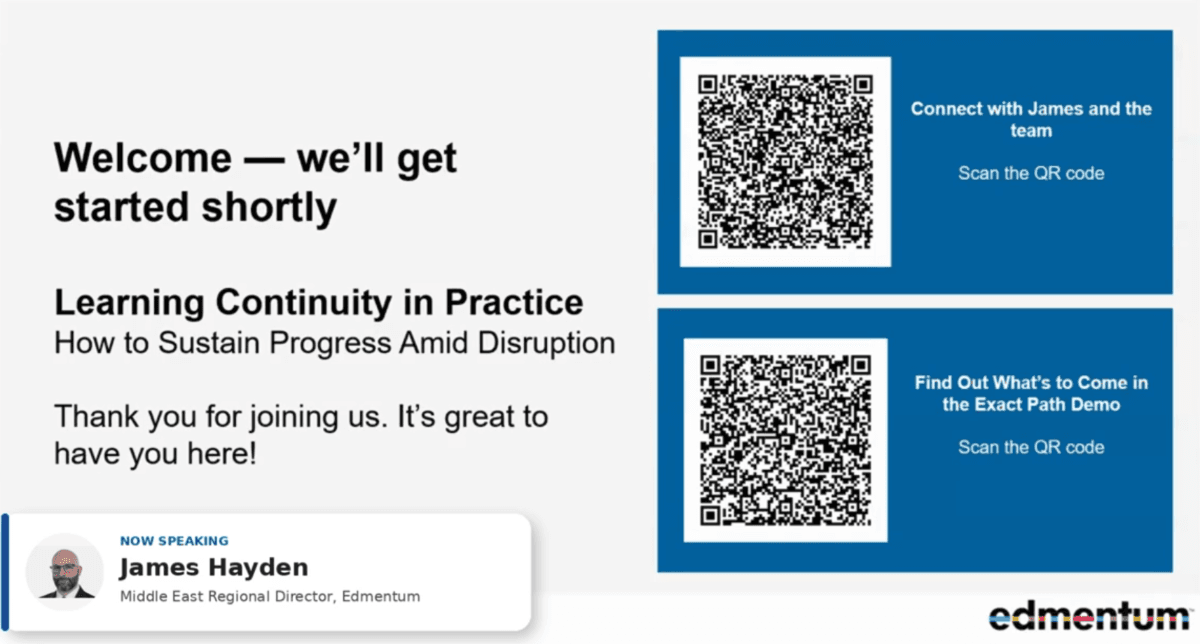
Learning Continuity in Practice: How to Sustain Progress Amid Disruption
This webinar explores how schools can adapt quickly, support students at different starting points, and maintain meaningful progress through disruption. Join Lee Dabagia , Principal at Summit International School , Dr. Tim Hughes , Director of Academic Quality Assurance & School Improvement at Bloom Education , Gemma Thornley , Principal at The Arbor School , and other leading practitioners, for a practical discussion on supporting learning continuity, helping students catch up, accelerating progress, and preparing students for a confident transition into the next academic year. In this session, you'll gain insights to: Identify unfinished learning and priority skill gaps Use structured and independent learning to accelerate progress Support students at different starting points across flexible learning models Strengthen visibility of progress for teachers, leaders and families Maintain learning continuity without increasing teacher workload Prepare students for a confident academic transition

How can assessment be inclusive?
Speaker Nashwa Aly Muhammad Session information This practical session addresses the limitations of one-size-fits-all assessments. It explores the positive impact of creating equitable opportunities for all learners, including those with special educational needs, while catering to cultural differences and varied learning preferences. Learn about the key principles of accessible and inclusive assessment and how to integrate these to accommodate diverse needs, by providing alternative testing formats and designing fair and unbiased assessments.

Inclusion 2.0: a fireside conversation with Daniel Sobel
What’s next for inclusion - and what will it really take to move from good intentions to embedded practice? Thrive is proud to be forging a new strategic partnership with the International Forums of Inclusion Practitioners (IFIP) - a global community committed to strengthening inclusive practice for every teacher and every learner. To mark the partnership, join Viv Trask-Hall, recently recognised as a Distinguished Fellow of IFIP, for a relaxed fireside conversation with Daniel Sobel - Chair of IFIP, President of the World Inclusion Congress (WIC), and Chief Exec of Inclusion Expert. Together, Viv and Daniel will explore what this partnership means in practice, what’s shifting globally in inclusion right now, and Daniel’s vision for Inclusion 2.0 - the next phase of inclusion that moves beyond policy into culture, leadership and everyday practice. We’ll also dive into questions including: What’s the biggest misconception schools hold about inclusion today? What does inclusion look like when it’s truly embedded — not just talked about? What patterns are emerging internationally, and what can we learn from them? Expect a candid, practical discussion, with space for audience questions and real-world reflections for leaders, practitioners and educators.

The Schools White Paper & Inclusion at Scale
The Schools White Paper Every Child Achieving and Thriving raises expectations for inclusion - earlier, more consistently, and across every school, backed by £1.8bn in new investment. But for many trusts, the challenge isn’t understanding what’s expected. It’s making it work in practice, at scale. Practice varies between schools. Capacity is stretched. Needs are more complex. What works in one school doesn’t always translate across others. Research from Thrive and ImpactEd, based on over 1,000 education professionals, highlights a clear “inclusion readiness gap” - between expectations and the conditions needed to deliver them. At the same time, £1.8bn in new investment creates a significant opportunity - but only if it’s used to strengthen delivery across the trust. In this session, Tom Preston, Viv Trask-Hall and Liz Murray will share what they’re seeing across the system and what seems to be making a difference. You’ll learn: What the White Paper means in practice for trust-wide inclusion Where delivery tends to break down across schools Why some approaches don’t scale - and what to do instead How to use new investment to build capacity across your trust How to assess and strengthen inclusion readiness

How to create a sense of belonging in the early years
Every child needs to feel that they belong – to know they are safe, seen and significant. Explore how to create a genuine sense of belonging in early years settings and why this is crucial for mental wellbeing and healthy brain development. Watch the webinar to learn: Why a strong sense of belonging is so important for young children's development and what it looks like in early years settings How to create inclusive, predictable spaces where children feel secure enough to express themselves and explore Practical ways to listen to children’s voices and involve them in shaping their environment and routines

Data informed decision making - Your Choice webinar recording
Get the highest quality CPD from experts at your convenience, with nasen's SEND CPD on Demand - The ultimate flexible training resource. This webinar explores how effective data collection and analysis can improve decision making, and have positive impact on SEND provision across settings . • The importance of sound, evidence and data informed decision making • The decisions we make – provision management • What data sets do we use • How do we analyse data and why • The difference evidence based practice makes Full access to this resource is available for £10.
SEND reforms – challenges, opportunities and next steps for schools
We bring together experts with specialisms in SEND, inclusion, alternative provision and more to discuss the SEND Reform: ‘Putting Children and Young People First’. We discuss the challenges, opportunities and gaps in the reforms and share advice on practical next steps for the new academic year and beyond. What the ‘universal offer’ should include to be effective in mainstream education How Individual Support Plans (ISPS) can help provide consistency between school systems supporting transition between different settings What schools need to consider to ensure inclusion bases work well in practice How alternative provision and mainstream settings can work more closely together Clarity on what detail is needed to address gaps in the current documentation and give schools clearer next steps
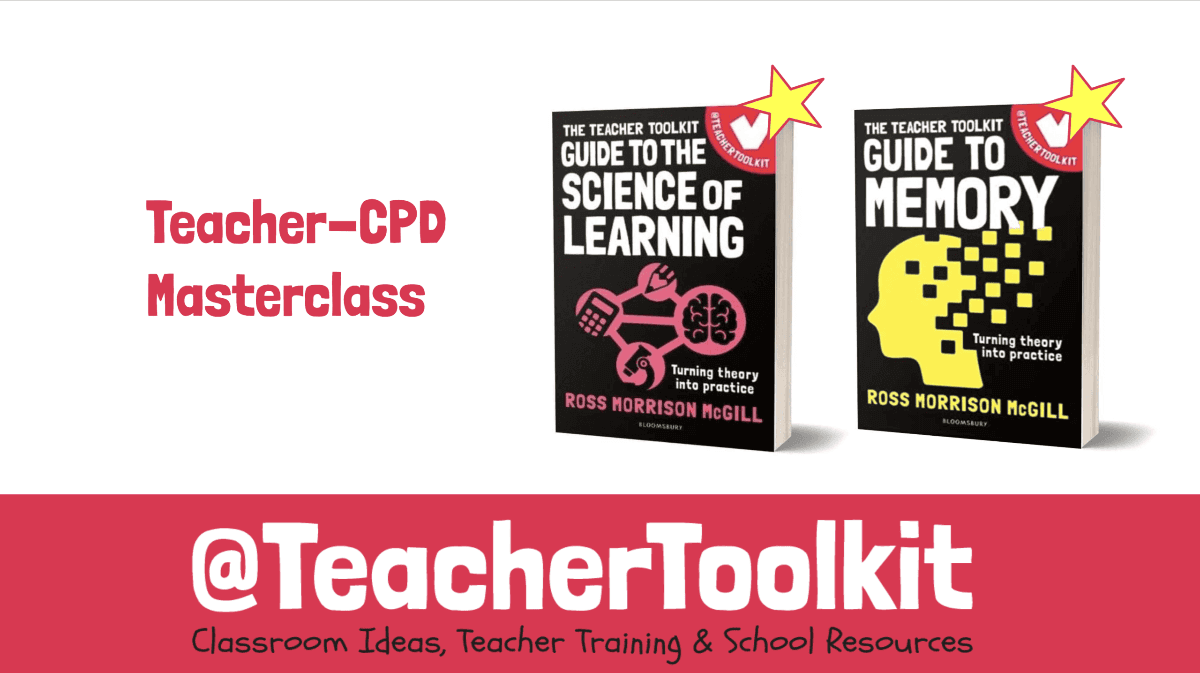
Understanding Anxiety & Learning Masterclass
Cost £49.99 This practical masterclass helps teachers understand how anxiety, attention and working memory influence learning. Drawing on The Teacher Toolkit Guide to Memory and The Teacher Toolkit Guide to the Science of Learning, the webinar introduces cognitive overload, neurodivergence, metacognition and the conditions students need to encode, store and retrieve knowledge. This download includes a 13-minute on-demand webinar, a 17-slide CPD presentation and one key practical resource. The webinar addresses one question: How does learning happen? This beginner’s guide to attention and working memory helps support teachers working with SEND and neurodiversity considerations, offering an introduction to MRI and fMRI research. Ideal for classroom teachers, middle leaders and senior leaders Ideal for SENDCos, inclusion leads developing their understanding of cognitive science Perfect for CPD leaders who want practical ideas to share for whole-school training This resource supports cognitive science, classroom practice and evidence-informed CPD. Save when you purchase the full CPD subscription series / or top membership option.

A safeguarding audit: How will your school fare?
How would your school fare in a full safeguarding audit? What would be considered exceptional practice? Where might improvement be needed? This SecEd Safeguarding Digest Masterclass considered these questions and more. The Masterclass walked Safeguarding Digest members through a typical school safeguarding audit, with two experienced safeguarding professionals discussing what they look for when they go into schools. Hosted by Safeguarding Digest editor Peter Henshaw, the Masterclass featured expert advice and insights from: Sara Alston : An experienced former SENCO and safeguarding lead who also works as a SEND, inclusion and safeguarding consultant and trainer. Sara is a member of the Safeguarding Digest editorial board. Elizabeth Rose : An independent safeguarding consultant and the director of So Safeguarding. Elizabeth has worked in education for almost 20 years and is a former school designated safeguarding lead and local authority safeguarding in education advisor. Sara and Liz discussed the tenets of exceptional practice as well as some of the common shortfalls, faults and examples of poor practice that they have seen during audits. We covered: Purpose and scope of a safeguarding audit, including reviewing policies, practice, and culture – and how Liz and Sara conduct audits. Policies, procedures, and compliance checks, including ensuring core policies are current, understood, and implemented as well as common shortfalls and examples of poor practice. Will we discuss key guidance updates for September 2026. Staff training, awareness, and safeguarding culture including induction & CPD, staff confidence in responding to concerns, and how to build an open culture where safeguarding is ‘lived’. Again we will discuss common shortfalls and faults to watch out for. Safer recruitment and single central record (SCR), including key audit checks for recruitment processes and vetting and some examples of poor practice. Recording, reporting, and responding to concerns, including reviewing case management, early help, and escalation processes as well as examples of poor practice. What next? How to respond to audit findings including identifying areas for development.

5 proven strategies for educators to help pupils express their emotions
Learn five key relational strategies that adults can use to support children and young people when they are overwhelmed by their emotions. Watch the webinar to learn: Effective strategies to support pupils when emotions feel overwhelming. Suggested practical activities to help embed these approaches in your setting. Ways to create a safe, nurturing environment where pupils feel heard and understood.
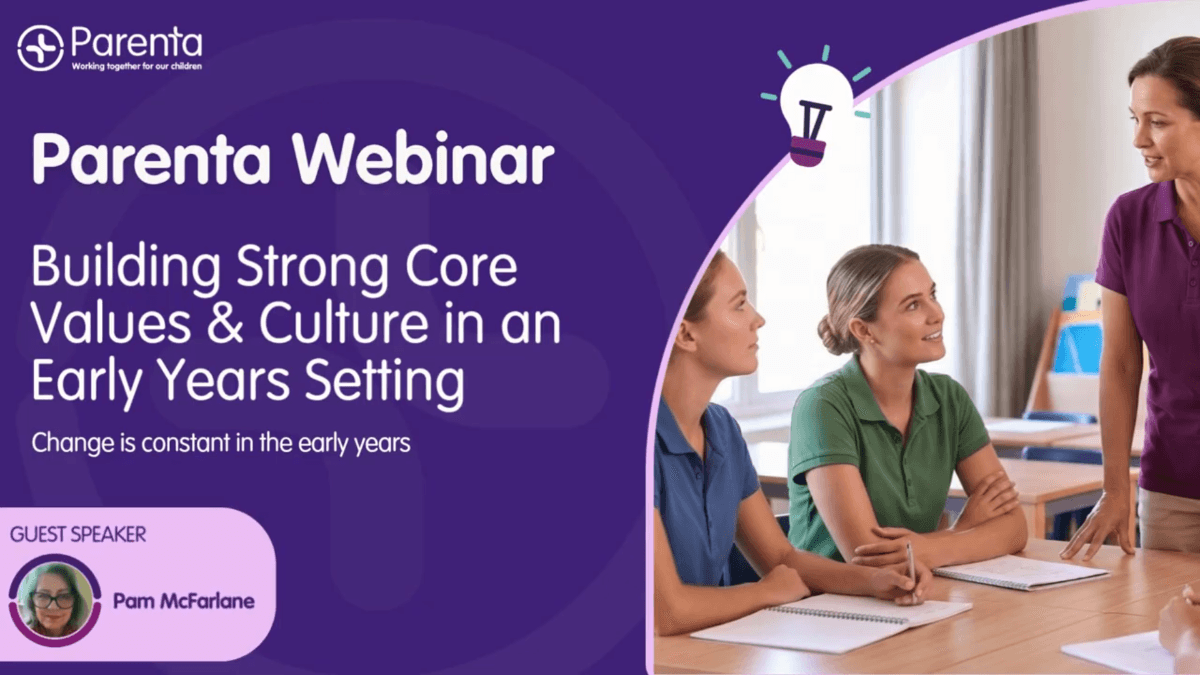
Building Strong Core Values & Culture in an Early Years Setting Webinar
n this practical and inspiring webinar, Pam McFarlane explores how strong core values and a positive culture can transform your early years setting. She shares practical strategies to help you build a supportive, consistent environment where children, families, and staff can thrive. This session focuses on creating a culture that reflects your setting’s values in everyday practice — from leadership and teamwork to communication and staff wellbeing. Perfect for early years practitioners, managers, and nursery owners, this webinar provides realistic, actionable ideas that can be implemented straight away. What you’ll learn: How to define and strengthen your setting’s core values Ways to build a positive and supportive workplace culture Practical strategies to improve teamwork, communication, and staff morale How strong values can support consistency, confidence, and better outcomes for children and families Simple steps to embed your culture into daily practice A must-watch for anyone working in early years settings who wants to create a stronger, more positive culture that supports both their team and the children in their care.