
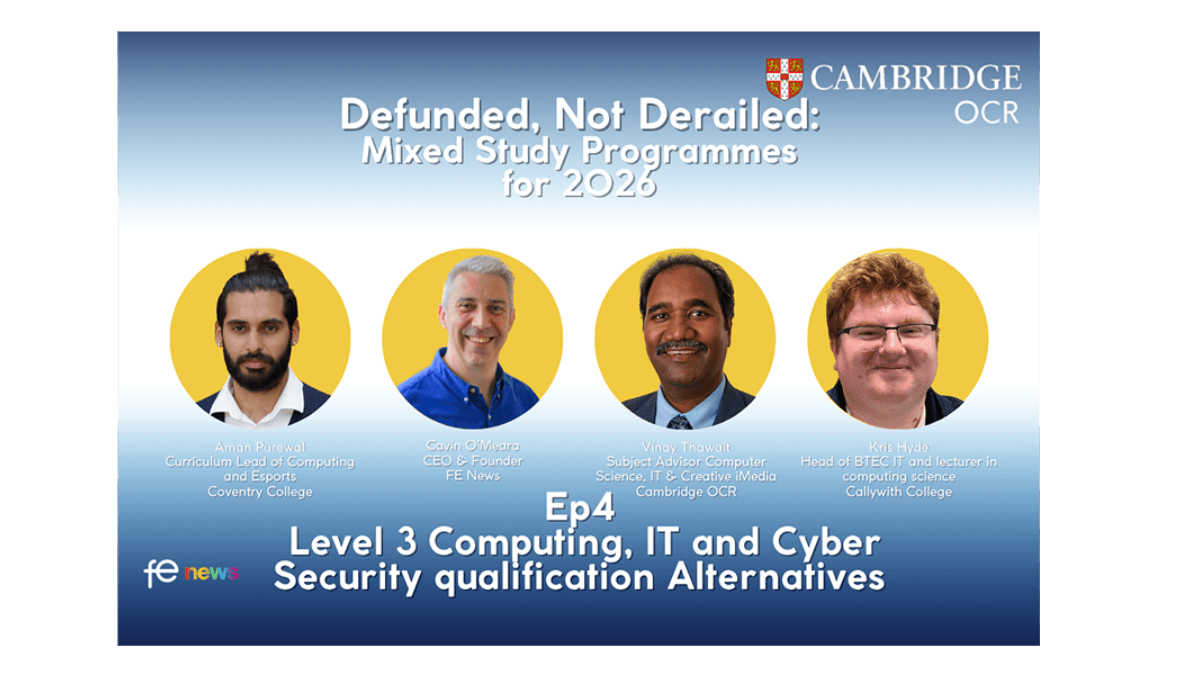
Episode 4 - Defunded Not Derailed: Alternatives for Level 3 Computing, IT and Cyber Security Quals
About This Event
Computing, IT and cyber security is one of the fastest-moving areas in post-16 education, and one of the most directly affected by qualification reform. As large applied qualifications are phased out, colleges delivering digital programmes must rethink how they structure provision to meet both learner needs and an industry that evolves by the month.
In Episode Four of Defunded, Not Derailed, we move from science to digital, applying the same subject-specific lens to explore what strong Level 3 computing, IT and cyber security provision looks like from here. What qualification alternatives are available? How can colleges design programmes that keep pace with rapid industry change? And what role might V Levels and mixed study programmes play in shaping digital pathways?
Gavin O'Meara is joined by Vinay Thawait, Subject Advisor at Cambridge OCR, Aman Purewal from Coventry College, and Kris Hyde from Callywith College, to explore how digital specialists are navigating reform and what curriculum leaders should be considering now.
Defunded Not Derailed was produced by FE News in partnership with Cambridge OCR.
Related Events
On-demand webinar: AI Black Box: responsible use for primary teachers
Webinar series: AI in Primary History Session 4: AI Black Box: responsible use for primary teachers Presenter: Dr Vanessa Cui, Dr Louise Wheatcroft, Dr Jordan Bird Generative AI offers incredible potential for resource creation for teachers, but the current dominant generative AI tools' core function is to be an agreeable, helpful assistant. This often leads to oversimplified narratives and a lack of necessary nuance and criticality, not to mention the common ethical challenges generative AI tools present such as bias, inaccuracy and environmental impact. These challenges potentially can compromise the quality of teaching materials and the ethics of teachers' practice. This focused 60-minute session is designed to inform teachers about principles of how dominant Generative AI models function, including the crucial role of Alignment (training on human preference) in the way generative AI responds to human inputs with the aim to empower teachers to confidently understand, evaluate, and responsibly use generative AI tools across their professional practice. This session includes: Understanding agreement: explain the principle of alignment (human preference training) to teachers and why it causes AI to avoid complexity, challenge, and conflicting evidence. The criticality challenge: evaluate the key pitfalls of using AI for history — including historical bias, presentism, and factual hallucinations — and learn to spot them. The CLEAR Prompting Framework: you will gain an actionable framework designed for more critical engagement with dominant generative AI tool and consider its use in your practice. Action plan for responsible use: leave with a concrete plan, identifying up to three actions you can responsibly integrate AI into your professional practice, including the necessary steps for safe and ethical implementation in your school. Non-member instant-access price: £45.00 HA Members can get instant access for £30.00
If technology is so clever, why are teachers so busy?
Are today’s classroom technologies really making teachers’ lives easier? In this episode of Teachwire Talks, Helen Mulley is joined by Ashleigh Kennedy from Dell Technologies and product marketing consultant Richi Fontaine to explore whether edtech is living up to its promise. Together, they discuss how technology has transformed schools, from interactive whiteboards to AI, and examine why workload remains such a challenge, even as new tools continue to emerge. Finally, they share practical insights into using digital tools more strategically, helping you save time while improving teaching and learning. About ED360 Teachers are under growing pressure to manage heavier workloads, respond to diverse student needs, close learning gaps, and confidently adopt new digital and AI-enabled approaches in the classroom. To support them effectively, schools need practical tools and accessible professional learning that can make an immediate difference. A clear next step is to register to join ED360 – Dell’s hub for smarter teaching – where educators can explore practical ideas, tackle common challenges, and see how modern technology and AI can support teaching and learning. The platform includes webinars, podcasts, classroom-ready resources, and expert-led content designed to help schools embrace future-ready IT and bring AI-driven learning into the classroom. Alongside ED360, educators can also benefit from other valuable resources such as Microsoft Learning Zone and Intel Skills for Innovation. Intel Skills for Innovation helps educators integrate technology into everyday learning through ready-to-use lesson plans, professional development, and real-world projects that build digital, problem-solving, and innovation skills. Microsoft Learning Zone is an AI-powered education app from Microsoft designed to help teachers create interactive lessons and learning activities more quickly. Register to join ED360 here . By encouraging teachers and school leaders to engage with ED360 and these wider resources, we can help reduce pressure, build confidence, and give educators practical support to create more engaging, inclusive, and future-ready learning experiences.

Let me hear the real you!
In this webinar, David Byrne and Mark Heffernan will explore the importance of discussing voice and persona with learners. With the development of AI, it’s become even more important for learners to know their voice, to know how they want to come across, and to stand out from AI generated content. This content is available to Modern English Teacher subscribers.
Do pupils understand AI tools better than we do?
How can we help students become thoughtful, critical users of AI? In this episode of Teachwire Talks, host Helen Mulley explores what pupils really understand about the AI tools they’re already encountering. Alongside Helen are guests Ben Garside and Emma Staves, both former educators now working at the Raspberry Pi Foundation . Together, they discuss what AI literacy means and how to teach it when you’re still getting to grips with AI yourself. About Experience AI Experience AI is an educational programme that offers cutting-edge resources on artificial intelligence and machine learning for teachers and students. Developed in collaboration by the Raspberry Pi Foundation and Google DeepMind, the programme supports teachers in the exciting and fast-moving area of AI, and gets young people passionate about the subject. Experience AI lessons The set of free lessons has everything teachers need to deliver AI and machine learning sessions in secondary school, including lesson plans, slide decks, worksheets, and videos. The lessons focus on AI applications that are relatable for young people and are designed so that teachers in a wide range of subjects can use them.
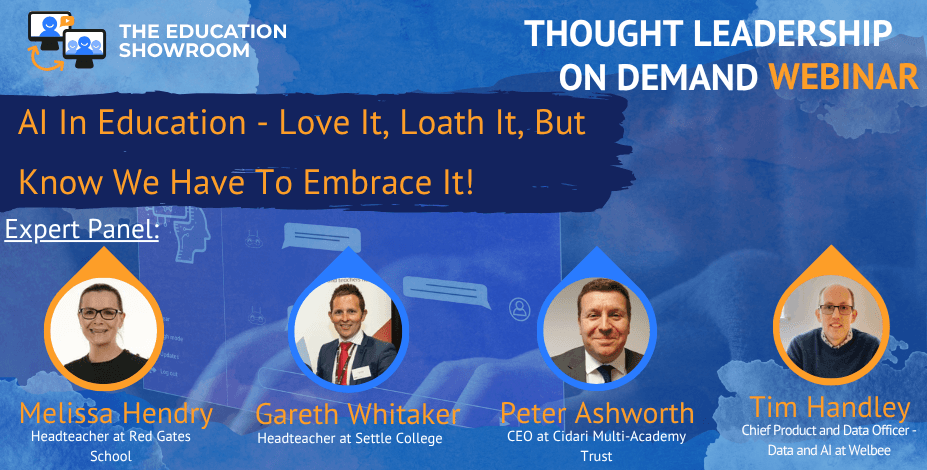
AI In Education – Love It, Loath It, But Know We Have To Embrace It!
Release Date: Wednesday 24th September, 2025 Hear from our expert panel of school and MAT senior leaders regarding all things AI including the challenges, benefits and how they are embracing AI in their schools and across MATs.
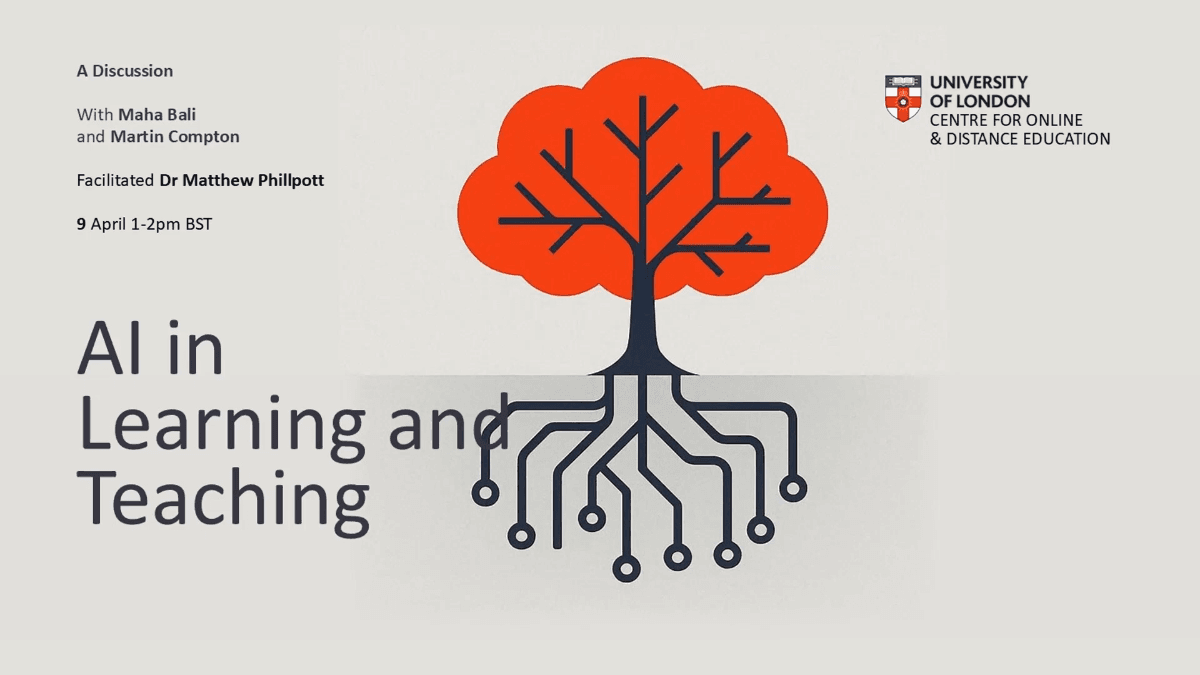
AI in learning & teaching
Explore the transformative impact of AI tools on higher education, with discussions on practical applications, ethical concerns, and the evolving role of educators in an AI-enabled world. In the fifth session of the free CODE learning and teaching webinar series , we will explore the positive and challenging impact on learning and teaching in Higher Education by Gen AI tools. In particular, we will discuss practical applications of using AI-powered systems in the curriculum and how these can enhance learning and teaching while also considering the concerns, issues around equity and privacy, and how the role of the educator needs to evolve to prepare students for an AI-enabled world. The session will draw from recent UK case studies and international best practices.

AI and wellbeing: what schools are noticing and why it matters
What is the webinar about? Children and young people are growing up alongside AI tools that respond instantly, adapt to them, and feel surprisingly conversational. These moments can spark curiosity and connection, but they also introduce pressures that may shape how young people feel, relate and regulate - and the pace of change is faster than our understanding of its emotional impact. Join us for a fireside conversation where Thrive’s Viv Trask-Hall is joined by digital education specialist, Anthony Magee, and Safeguarding and Mental Health GLF Trust Lead, Fiona Jarman, to explore the emerging ways AI is shaping children’s emotional and social worlds, and how schools can respond. You’ll gain a high-level understanding of the emerging impact of AI, drawing on data and behavioural insights, alongside relational perspectives on supporting young people’s wellbeing as technology evolves.

Purposeful assessment
In the sixth session of the free CODE learning and teaching webinar series , we will explore how we can design assessments that have purpose: to both measure whether students have met their learning outcomes, and also act as a learning opportunity in themselves. We will consider how the purpose of assessment can be to encourage not only learning, but also creativity and criticality, and what this might look like across different disciplines or institutions. How can we do this in the context of GenAI where students might be less motivated to focus on their own thoughts or responses in fear of getting it wrong, or in a situation when they feel too time-poor to successfully complete assessment? This session will explore some answers and approaches to this wicked problem. Purposeful assessment also needs to enable compassion and inclusivity, to ensure that all students feel able to get the most out of assessment opportunity - so these considerations will also be foregrounded during the session.

Qatar STEM Education
As nations invest in future-ready talent, innovation, and digital transformation, STEM education has never been more important. This summit will unite educators, policymakers, academic leaders, EdTech innovators, and industry experts to explore new ideas, share best practices, and shape the future of learning. The 4th Annual Qatar STEM Education Conference in 2026 will convene the most influential voices in education, technology, and policy. The conference will offer keynote addresses, panel discussions, research showcases, and networking

Digital leaders programme
Dates: 03 November, 05 November, 10 November, 12 November, 17 November, 19 November, 24 November, 26 November 2026 The online programme is made up of eight sessions, usually on Tuesdays (10:00-12:00) and Thursdays (14:00-16:00). Our programme for aspiring and current digital leaders returns next year, and we're offering a new format to support different learning preferences and provide more flexibility. What to expect This course offers a variety of sessions and exercises to help you develop as a digital leader. It is designed for current and aspiring leaders in further and higher education organisation regardless of discipline, function or department who wish to develop their digital leadership skills or have an interest in digital transformation. You'll collaborate with like-minded peers to explore the tools needed for effective leadership in the digital era. The programme equips you with the skills to lead and manage digitally-driven transformations across all levels of an organisation. You'll gain insights into how digital technology is changing organisational dynamics, explore a variety of challenges and opportunities that digital leaders encounter and learn useful techniques and strategies to influence change and lead effective digital transformation in your organisation. Training outcomes By the end of the programme you will be able to: Define digital leadership and explore what makes an effective digital leader Outline and visualise your organisation’s digital practice Align digital strategy with organisational goals Assess the impact of emerging new technologies on your organisation Use data and stories to communicate digital transformation Explore and examine different approaches to digital transformation Apply change management models and techniques to embed and anchor change in your organisation Foster a culture of innovation through digital leadership By taking part in this course, you can also earn digital credentials to show your achievement. A key feature of the programme is the opportunity to connect and network with other digital leaders, participants are encouraged to join our free online digital leadership and culture forum.
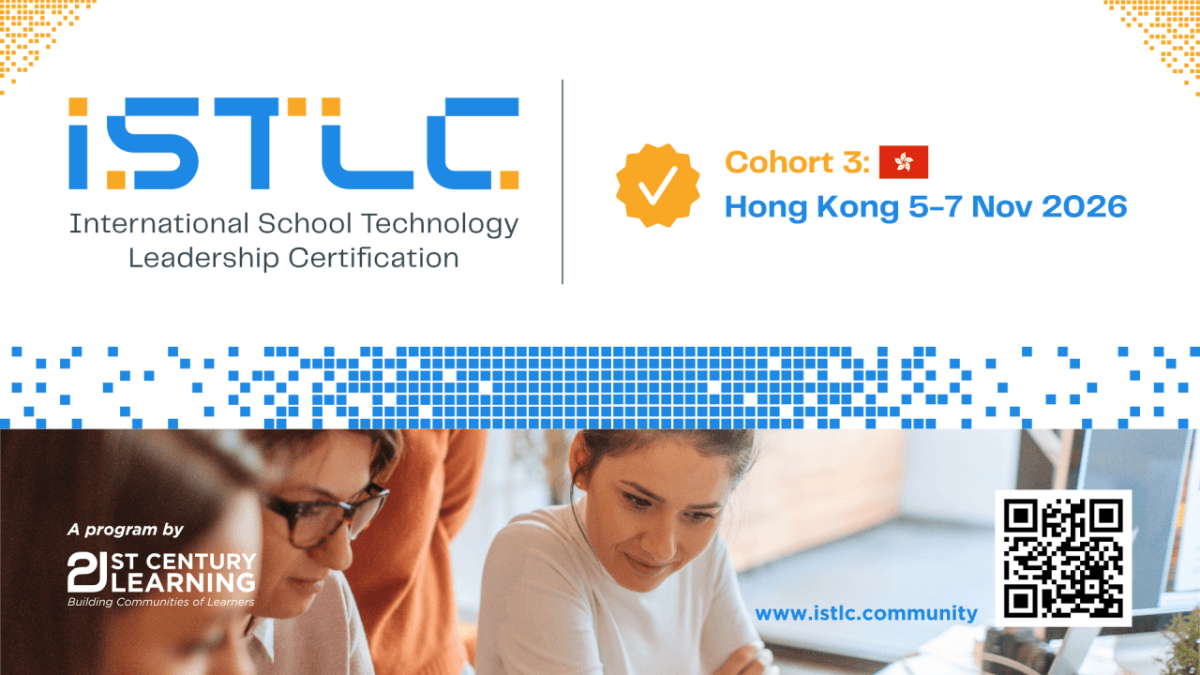
International School Technology Leadership Certification (ISTLC) - Cohort 3
Lead with vision, clarity, and confidence, ISTLC Certification empowers international school leaders to drive innovation in both learning and IT systems. Join the blended course that bridges strategy and hands-on practice for real-world impact. Super Early Bird Register by 30 June 2026 - $1050 Early Bird Register by 31 July 2026 - $1150 Regular Register by 30 September 2026 - $1250 Last minute After 30 September 2026 - $1350
EdTech Summit 2026
Ticket prices to be announced. A Strategic Summit for School Tech Leaders and Leadership Teams The International Schools EdTech Summit - Singapore 2026, brings together ICT Directors, EdTech Coordinators, Operations Managers, and School Leaders for a full-day summit focused on the systems, structures, and strategies that power modern schools. Designed to strengthen the partnership between educational leadership and technology teams, this summit helps schools future-proof their infrastructure, streamline operations, and harness innovation. What to Expect: Strategic workshops, presentations and panel sessions across various streams A focus on practical action: participants will reflect, plan, and leave with takeaways to implement with their leadership team Group registration encouraged: Schools are invited to send both tech and leadership representatives to maximise outcomes Sponsors and solution providers carefully selected for their strategic value to international schools