

Teaching First Aid Course
About This Event
Learn how to teach first aid to young people using the British Red Cross's Everyday First Aid approach, and using free medically approved, educationally sound resources.
Learning outcomes
By completing this course, you will:
Understand the Everyday First Aid approach and how to use it to effectively teach first aid to your young people.
Understand how to navigate and utilise our resources and activities on the First Aid Champions website to effectively teach first aid skills to young people.
Be able to use our teaching resources to engage with your young people on the topic of first aid.
Be able to use our first aid skill videos, which use the Everyday First Aid approach, to enhance your confidence and knowledge in first aid.
Masterclasses are available for groups of five or more and can be delivered online or face-to-face, subject to facilitator availability.
To book a group masterclass, email redcrosseducation@redcross.org.uk with your group size, preferred dates, location and delivery method.

Related Events

5 proven strategies for educators to help pupils express their emotions
Learn five key relational strategies that adults can use to support children and young people when they are overwhelmed by their emotions. Watch the webinar to learn: Effective strategies to support pupils when emotions feel overwhelming. Suggested practical activities to help embed these approaches in your setting. Ways to create a safe, nurturing environment where pupils feel heard and understood.

Teaching about Migration Course
This course covers an introduction to teaching about migration using a trauma-informed approach, including the tools, knowledge and resources you need to feel confident teaching about migration, even if you have young people with lived experience of migration in the room. Learning outcomes By completing this course, you will: Understand the experiences of people with refugee status or people seeking asylum, whilst defining key terminology. Understand the impact of trauma on learners and apply six trauma-informed principles to teaching about migration. Use our teacher resources to engage and support your students. Masterclasses are available for groups of five or more and can be delivered online or face-to-face, subject to facilitator availability. To book a group masterclass, email redcrosseducation@redcross.org.uk with your group size, preferred dates, location and delivery method.

Teaching about War and Conflict Course
This course covers an introduction to teaching about global conflicts through the rules of war. It also includes handling the challenging conversations that can arise from this topic. Learning outcomes By completing this course, you will: Demonstrate an understanding of the principle of neutrality and the rules of war. Apply a five-step method to confidently facilitate challenging classroom discussions. Use our teaching resources to engage and support your students. Masterclasses are available for groups of five or more and can be delivered online or face-to-face, subject to facilitator availability. To book a group masterclass, email redcrosseducation@redcross.org.uk with your group size, preferred dates, location and delivery method.

Teaching Resilience Course
This course will cover an introduction to teaching resilience using a practical learning approach. Young people are faced with many different challenges each day. As educators, it is important that we help young people develop the skills that can help them to grow their resilience in order to help them cope with adversities they may be faced with. Learning outcomes By the end of this course, you will: Understand what personal resilience is and the challenges facing young people today. Understand the social and emotional skills needed to build resilience and how to teach these in a practical way. Use our teaching resources to engage with the topic of resilience with your students. Masterclasses are available for groups of five or more and can be delivered online or face-to-face, subject to facilitator availability. To book a group masterclass, email redcrosseducation@redcross.org.uk with your group size, preferred dates, location and delivery method.

Teaching tough topics: Climate risk, resilience and belonging
Young people are growing up with overlapping crises: climate change, conflict, displacement, cost-of-living pressures and rising anxiety about the future. Many bring these questions and worries into the classroom, and teachers are often left to hold complex conversations without feeling fully equipped. This webinar will explore two elements of the citizenship curriculum. First, how do we teach children about resilience? And second, how do we work with young people to discuss the climate debate? Learning outcomes By the end of this webinar, attendees will: Will have explored ideas for teaching resilience with young people Will have more confidence for leading and teaching a curriculum which looks at climate issues and sustainability We will discuss: Which elements of citizenship or personal development are most engaging for students? Approaches in schools to build belonging and resilience in students Approaches which are effective in teaching students about the climate crisis How can we evaluate the impact of our teaching in these areas? What lessons can we learn from the British Red Cross Humankind programme? Given that the curriculum review intends to embed climate and sustainability education throughout England’s school curriculum, what are the key challenges schools face in teaching about these issues and how can we overcome them? Top tips in leading a citizenship and personal development curriculum.

Developing key skills: Effective enrichment in secondary schools
This best practice webinar considered practical ideas for academic enrichment activities in secondary schools that develop key skills and effectively prepare students for higher education. Hosted by SecEd in partnership with our friends at The Brilliant Club , our expert panel identified the skills that are most important for further and higher education and the modern workplace before discussing how enrichment activities and learning beyond the curriculum can teach and enhance these skills. We considered skills including critical-thinking, independent learning, self-efficacy, oracy, and other so-called “soft skills” that are vital to student progression and outcomes. The webinar considered how enrichment activities can target disadvantaged students, including Pupil Premium, and open opportunities. We then drew on the experience and lessons learned from The Brilliant Club’s work with schools (the education charity works with almost 900 schools and 20,000 students a year). The webinar also considered the forthcoming curriculum reforms. The Department for Education, in its response to the Curriculum and Assessment Review, has confirmed it will be working “on the development of a new set of benchmarks, to set out the steps every school and college can take to provide every child with access to a strategically planned and ambitious enrichment offer”. Ofsted will also be taking account of these benchmarks once they have been developed. As such, we discussed what we might expect from these benchmarks, the tenets of an effective enrichment programme, and what schools need to consider to ensure their offer to students is broad, balanced and ultimately effective.
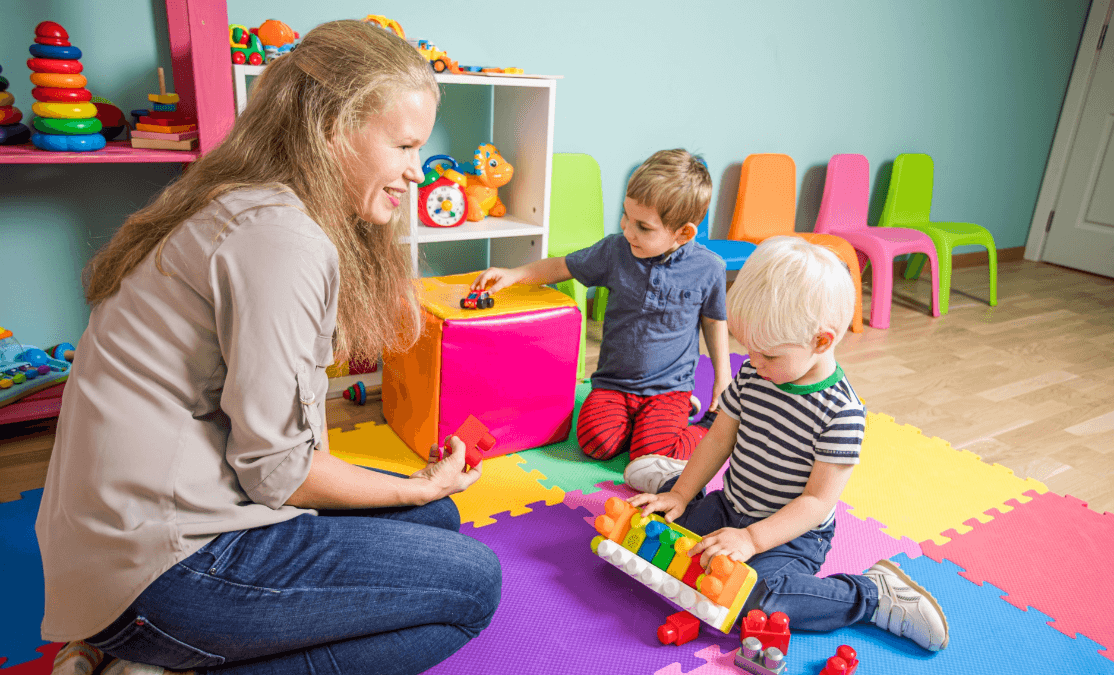
How to create a sense of belonging in the early years
Every child needs to feel that they belong – to know they are safe, seen and significant. Explore how to create a genuine sense of belonging in early years settings and why this is crucial for mental wellbeing and healthy brain development. Watch the webinar to learn: Why a strong sense of belonging is so important for young children's development and what it looks like in early years settings How to create inclusive, predictable spaces where children feel secure enough to express themselves and explore Practical ways to listen to children’s voices and involve them in shaping their environment and routines

The Neuroscience of Feeling ‘At Home’: Why mattering supports belonging and wellbeing
What is the webinar about? Children’s Mental Health Week 2026 theme, This Is My Place , invites us to notice the moments that help children feel emotionally “at home” in school. Research shows that one of the strongest drivers of this feeling is mattering - the sense of being noticed, valued and significant. When children feel they matter, their brains are more able to regulate, connect and engage with learning. But what does mattering look like in everyday practice? And how does it support a deeper sense of belonging and wellbeing? Join Thrive’s Viv Trask-Hall and Laura Nicholson alongside Victoria White, Trust Leader Quality of Education, at The Consortium Academy Trust, as they explore how emotional safety, mattering and relational practice work together to help children feel settled and secure. They unpack the science behind these ideas and link it directly to what educators see in real classrooms. You’ll leave with clear insights, practical reassurance and renewed confidence.
School Services Live: Restructures and Redundancies
We know that school leaders and teachers can’t be expected to be experts in every area, especially in complex HR and school finance matters. That’s why Juniper’s consultants will break these topics down clearly and answer any questions you have. This session focuses on handling restructures and redundancy processes in an education setting, providing practical tools that you can use immediately. Don't miss out on: Education finance and HR in the news - helping you keep up to date with changes in the sector (Webinar recorded November 2025) Restructures and redundancies in education settings: Financial strategies and planning ahead HR strategies and planning ahead
Teaching Climate Preparedness Course
Welcome to Teaching Climate Preparedness, a comprehensive course designed to empower you with the confidence and skills to effectively teach climate preparedness using a holistic framework, developed by the British Red Cross. This course equips you with the resources, skills and training needed to successfully implement the holistic framework when teaching climate preparedness with your young people. Learning outcomes By completing this course, you will: Demonstrated an understanding of a holistic approach to climate education and why this is appropriate given the topic. Have gained an understanding of what extreme weather and eco-anxiety are, how they affect young people, and how to support emotional wellbeing through climate education. Identified key benefits of using the Weather Together toolkit to teach climate preparedness. Gained practical skills to use the Weather Together toolkit with young people. Masterclasses are available for groups of five or more and can be delivered online or face-to-face, subject to facilitator availability. To book a group masterclass, email redcrosseducation@redcross.org.uk with your group size, preferred dates, location and delivery method.
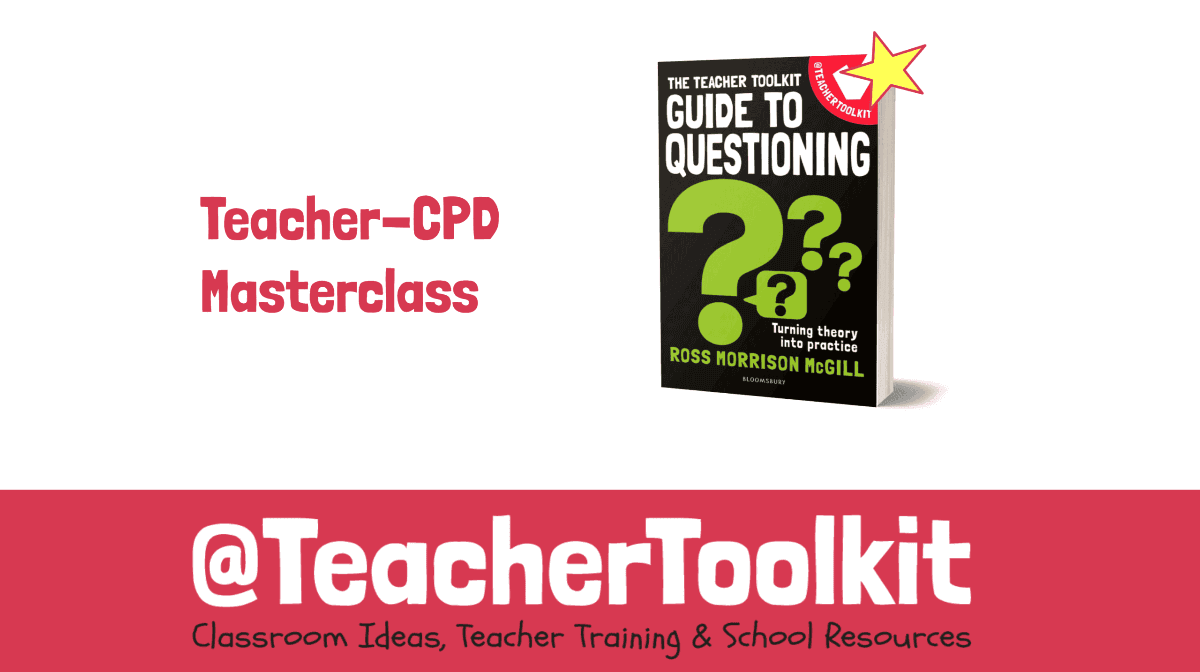
Guide To Questioning Masterclass
Cost: £49.99 This resource explores how questioning can be used deliberately to improve student thinking, participation and real-time assessment in the classroom. This download includes a 13-minute webinar walkthrough , a 26-slide deck , a resource pack , 10 cartoon sketchnotes , an audiobook introduction , and an additional implementation resource . Ideal for classroom teachers, middle leaders and senior leaders Perfect for CPD leaders who want to improve questioning, engagement and whole-class participation This resource supports evidence-informed teaching, teacher training and school improvement.
Learning Continuity in Practice: How to Sustain Progress Amid Disruption
This webinar explores how schools can adapt quickly, support students at different starting points, and maintain meaningful progress through disruption. Join Lee Dabagia , Principal at Summit International School , Dr. Tim Hughes , Director of Academic Quality Assurance & School Improvement at Bloom Education , Gemma Thornley , Principal at The Arbor School , and other leading practitioners, for a practical discussion on supporting learning continuity, helping students catch up, accelerating progress, and preparing students for a confident transition into the next academic year. In this session, you'll gain insights to: Identify unfinished learning and priority skill gaps Use structured and independent learning to accelerate progress Support students at different starting points across flexible learning models Strengthen visibility of progress for teachers, leaders and families Maintain learning continuity without increasing teacher workload Prepare students for a confident academic transition