

Teachwire Talks - Are you smarter than a Stone Age engineer?
About This Event
Are your pupils smarter than a Stone Age engineer? Helen Mulley investigates in this episode of Teachwire Talks, alongside Jennifer Wexler from English Heritage and maths communicator Thomas K Briggs. Together, they unpack how Stonehenge was constructed and precisely aligned to the solstices, revealing extraordinary ancient engineering and maths. They also chat about how these prehistoric problems can spark powerful STEM learning in today’s classrooms.
Find out how you can bring prehistory to life with a school visit to Stonehenge.
About the guests
Jennifer Wexler is the historian of prehistoric sites at English Heritage, and former project curator on the Grave Goods Project and World of Stonehenge Exhibition at the British Museum. Her research interests include archaeological and mortuary landscapes, digital heritage, forgotten histories, and the public presentation of archaeology.
Thomas K Briggs is a learning and education consultant for museums, galleries, libraries and archives, in the heritage sector and beyond. He is the author of The Mathematician’s Library, about the books that unlocked the power of number, and has also set up the History and Mathematics in Education Network (HaMiEN) to encourage and facilitate connections between people interested in history and maths.
Related Events
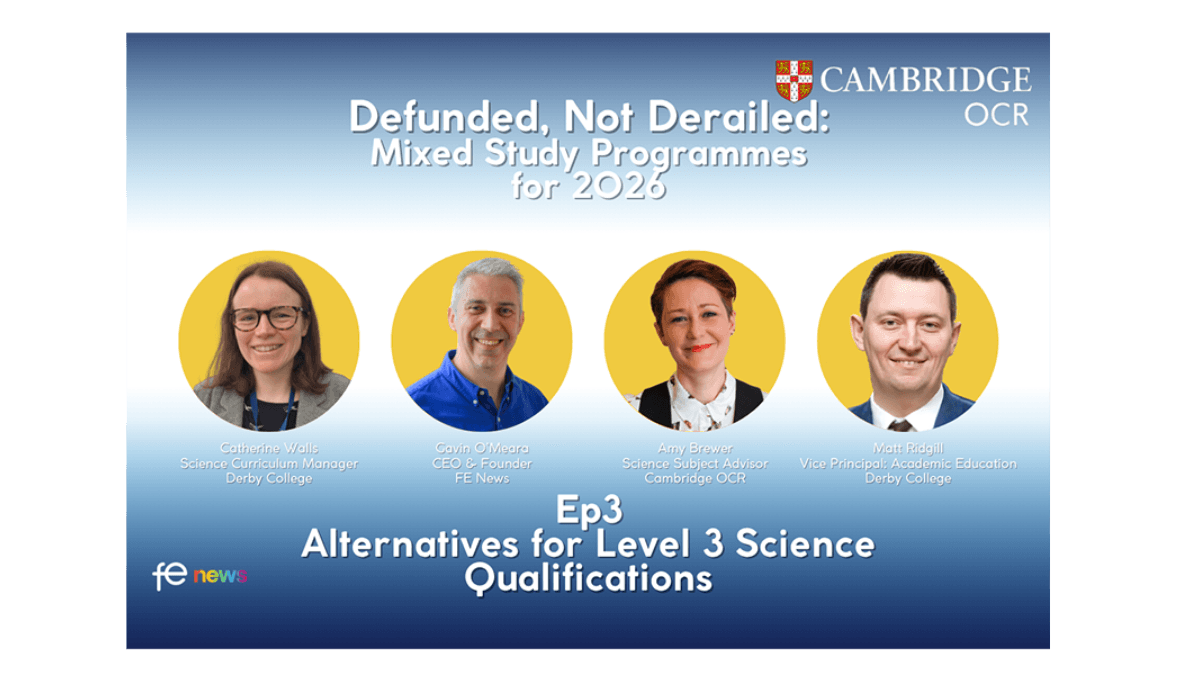
Episode 3 - Defunded Not Derailed: Alternatives for Level 3 Science Qualifications
Episode Date: Thursday 26th March 2026 Science is one of the most critical subject areas in post-16 education, feeding directly into healthcare, engineering, laboratory sciences and dozens of other STEM careers. But as large applied qualifications are phased out, many colleges are asking the same question: what does strong Level 3 science provision actually look like from here? In Episode Three of Defunded, Not Derailed, we turn from the broader curriculum picture to a specific subject area that affects thousands of learners every year. What qualification options are currently available to colleges? How can science departments maintain clear progression routes into university and technical careers? And what might the introduction of V Levels, starting with digital, education and finance from 2027, signal for science-related curriculum planning down the line? Gavin O'Meara is joined by Amy Brewer, Science Subject Advisor at Cambridge OCR, Catherine Walls, Curriculum Manager for Science at Derby College, and Matt Ridgill, Vice Principal: Academic Education at Derby College, to explore how science specialists are navigating reform on the ground and what curriculum leaders should be considering now. Defunded Not Derailed was produced by FE News in partnership with Cambridge OCR.

Mathematics Mastery Primary Information Session
Watch this session to discover everything our subject excellence programme has to offer: dedicated school support, subject-specific CPD, assessment, and comprehensive teaching and learning resources. Download sample resources: https://bit.ly/4g2wDIQ Book a call with our Partnerships team: https://bit.ly/4jYEurr

Effective leadership of primary maths
Come along to this 4-part live webinar CPD where you will be supported in everything you need to deliver effective maths leadership. Audience: School leaders Subject: Primary maths Topics: Analysis and use of assessments, Knowledge of the curriculum, Knowledge of your subject field, School leadership, Student assessment practices Are you new to the role of maths leader? Do you want to have a meaningful impact but aren’t sure where to start? Come along to this 4-part live webinar CPD where you will be supported in everything you need to deliver effective maths leadership. Session 1 – Identifying change Thursday 10 September 2026, 3:45pm – 4:45pm We will start by exploring the role of the maths leader and provide strategies to effectively support and address your school's unique needs. This session will guide you through the process of identifying those needs, ensuring you are equipped to drive meaningful change and enhance mathematical learning within your school. Session 2 – Action planning and implementing change Thursday 8 October 2026, 3:45pm – 4:45pm In this session, we will map out effective strategies for driving necessary change, set realistic targets, and address potential barriers. Gain practical insights and tools to ensure successful implementation and foster a culture of continuous improvement in maths education at your school. Session 3 – Planning a staff meeting Thursday 12 Novemver 2026, 3:45pm – 4:45pm What does an effective maths staff meeting look like? We will support you in designing CPD tailored to the specific needs of your school. Session 4 – Monitoring and driving forward Thursday 28 January 2027, 3:45pm – 4:45pm Evaluate the impact of your staff meeting and identify the next steps for continued improvement. In this session, we will explore methods to continuously enhance the teaching and learning of maths through a cycle of effective leadership. Learn how to sustain progress and drive ongoing success in your school's maths program. Purchasing via Webinar Tokens? This session costs 20 tokens per ticket, please follow the link below to book your tickets now https://forms.monday.com/forms/db48eeb6d0df94f13c5e3575e33312e4?r=euc1 THIS WEBINAR IS A LIVE EVENT AND WILL NOT BE RECORDED. PLEASE DO NOT MAKE A BOOKING ON THE BASIS OF VIEWING THE SESSION LATER AS THIS IS NOT POSSIBLE.

Qatar STEM Education
As nations invest in future-ready talent, innovation, and digital transformation, STEM education has never been more important. This summit will unite educators, policymakers, academic leaders, EdTech innovators, and industry experts to explore new ideas, share best practices, and shape the future of learning. The 4th Annual Qatar STEM Education Conference in 2026 will convene the most influential voices in education, technology, and policy. The conference will offer keynote addresses, panel discussions, research showcases, and networking

BRILLIANT Festival
BRILLIANT is the fastest growing education event in the UK and the country’s largest STEAM festival What is BRILLIANT Festival? BRILLIANT is a free , one day festival built to reignite your passion for teaching. It brings together more than 2,000 teachers, leaders and education professionals for the largest education event in the North West and one of the most energising days of CPD in the UK. The event creates a space where educators, employers, innovators and policymakers can share ideas, explore new approaches to learning, and build meaningful partnerships. It is not a traditional conference. Instead, BRILLIANT focuses on conversations, workshops, and real examples of how collaboration between education and industry can transform opportunities for young people. Across the day, attendees will hear from leading voices in education, business, and technology. They will explore new ways of thinking about skills, curriculum, careers education, and the role of employers in shaping learning. Most importantly, they will leave with practical ideas and connections they can take back into their work. BRILLIANT is about possibility and aims to show what happens when schools and industry work together to create better pathways for the next generation.

Primary Science Teacher CPD: Plate Tectonics, Volcanoes and Earthquakes
Join us at the British Geological Survey for an in-person CPD session for primary teachers, taking a deep dive into the KS2 geography topic. In this free CPD session for primary teachers, geologists from the British Geological Survey will guide you through all you need to know to teach plate tectonics, volcanoes, and earthquakes to your KS2 classes. Visit the British Geological Survey’s campus in Nottinghamshire to gain some hands-on experience with volcanic samples. In this CPD session we will discuss what is covered by the KS2 curriculum and demonstrate some fun and engaging volcano and earthquake activities you can use in the classroom. You will be able to take a look at some real rock samples from our core store. Lunch as well as tea, coffee, and biscuits will be provided. Pre-booking is required and places are limited so book early! Can't make this session? Register your interest here for future dates.
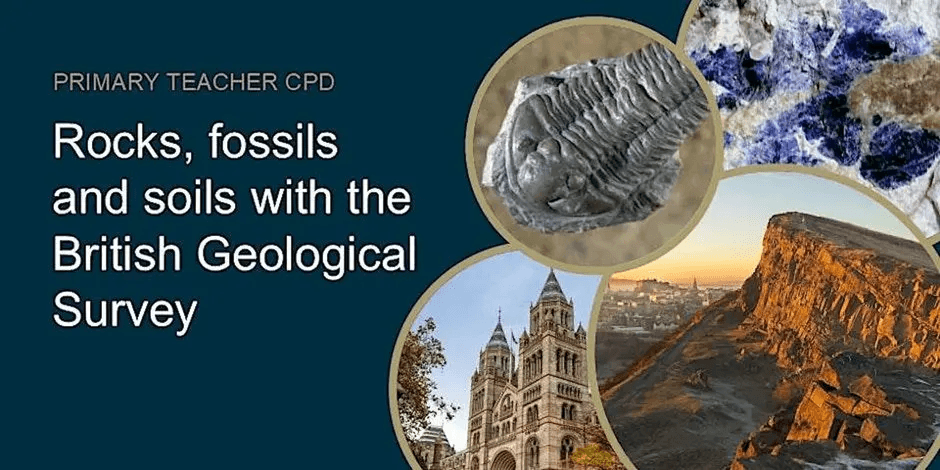
Primary Science Teacher CPD: Rocks, Fossils and Soils in London
Join us at the Natural History Museum for an in-person CPD session for primary teachers, taking a deep dive into the KS2 rocks topic. Join us for an in-person CPD session for primary teachers, taking a deep dive into the KS2 rocks, fossils and soils topics. In this CPD session for primary teachers, geologists from the British Geological Survey will guide you through all you need to know to teach rocks, fossils and soils to your KS2 classes. Join the British Geological Survey at the Natural History Museum to gain some hands-on experience with rock and fossil samples. In this CPD session we will discuss what is covered by the KS2 curriculum and demonstrate some fun and engaging rock-themed activities you can use in the classroom. You will be able to take a look at some real rock and fossil samples from our core store. Whether you are experienced teaching this topic or new to it there is something for you to take back to the classroom. Lunch as well as tea, coffee, and biscuits will be provided. Pre-booking is required and places are limited so book early! Can't make this session? Register your interest here for future dates.
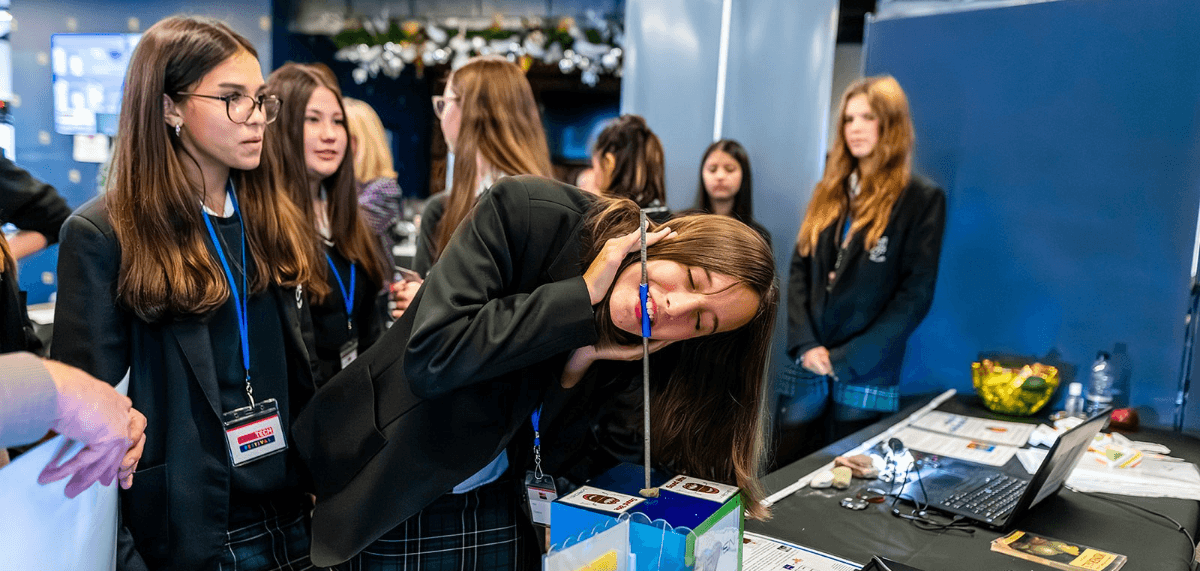
TeenTech Sussex Festival
We are delighted to be returning to Sussex in Autumn 2026 for our fourth TeenTech Sussex Festival, and we are delighted to partner with the West Sussex, Brighton and Hove Careers Hub, a part of the Careers & Enterprise Company’s (CEC) national network of Careers Hubs, London Gatwick and Arup, to deliver this experience. This event will bring together students across the region for an exciting interactive programme helping young people understand the range of opportunities across digital, science and technology and the many different entry points. A virtual innovation session will precede the in-person event at the Brighton Racecourse to enable schools to involve as many Year 8/Year 9 students as they wish. We have a limited number of places available for this special day, and early booking is recommended. Open only to schools in Sussex.
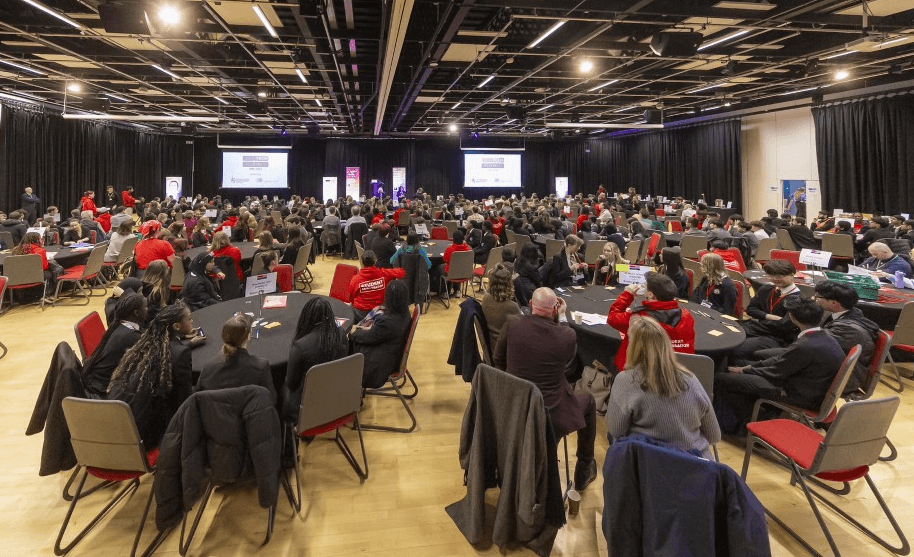
TeenTech DMU Festival
The TeenTech DMU Festival is returning for its second year and will bring together schools and colleges across Leicestershire for an exciting, interactive programme that will help young people understand the range of opportunities in digital, science, and technology, as well as the many different entry points. The TeenTech Festival, held at De Montfort University, is a sharply focused event that changes perceptions and helps students understand their own potential. It’s a day that changes minds – especially those who may never have previously considered a career in science or technology! We have a limited number of places available for this special day, and early booking is recommended. Open to students in Years 9-11 from schools in Leicestershire.
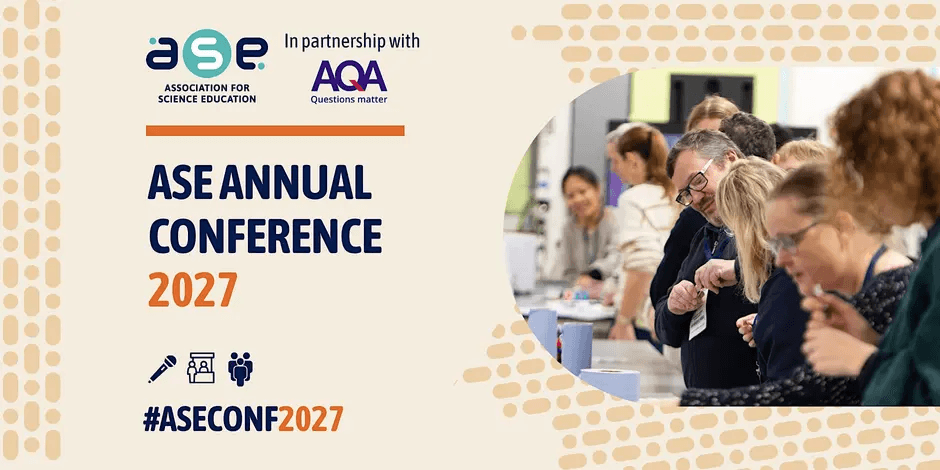
2027 ASE Annual Conference - Shaping the Future of Science Education Together
The ASE's Annual Conference is returning to the University of Northampton's Waterside Campus for 2027 - 7th to 9th January inclusive. Unbeatable expertise in science teaching and learning professional development..... The UK's largest event focussing on science education professional teaching and learning, the ASE Annual Conference, takes place at the University of Northampton's Waterside Campus from Thursday 7th to Saturday 9th January inclusive Choose from over 200 sessions from the best science education speakers and practitioners - all in one place. Focus on your school’s specific priorities, develop your own subject knowledge and learn from other teachers and science education experts. Enjoy fantastic networking opportunities to gain exciting new ideas, approaches and resources that you can share with your whole team. Explore an unmissable exhibition of more than 50 science education organisations, full of activities, equipment and resources with exclusive competitions and giveaways. This is an amazing opportunity to engage in cost-effective, subject-specific professional learning and is perfect for all primary science educators, secondary and further education teachers, technicians, trainees and multi-academy trust science teams. How much does it cost to attend? One day registration starts from only £112 for ASE teacher-members and even less for trainees-members and technician-members. Trainee membership is free, technician membership is £30. Our most affordable Early Bird tickets will be on sale until 23:45 on Sunday 1st November 2026. Please note that registration will stay open for the duration of the conference. The registration desks will remain open throughout all 3 days as an information point too. Where can I find our more information about the Conference? The most up-to-date information can be found by exploring the Conference Webpage, within which you will find the link to the live digital timetable Sched - why not create your own personal agenda to suit your own professional development needs in Sched?

Teaching Maths Functional Skills: Developing Your Practice
This course aims to develop the practice of new, existing, and aspiring teachers of Functional Skills Maths in the Further Education and Skills sector. Programme aim This course aims to develop the practice of new, existing, and aspiring teachers of Functional Skills Maths in the Further Education and Skills sector. The course explores key pedagogical concepts which underpin best practice in Functional Skills Maths as well as practical evidence-based teaching strategies to support learners to make progress in Functional Skills Maths. Programme structure 10 weeks x 2 hours = 20 hours Dates: 8 January 2027 – 1pm - 3pm 15 January 2027 – 1pm - 3pm 22 January 2027 – 1pm - 3pm 29 January 2027 – 1pm - 3pm 5 February 2027 – 1pm - 3pm 12 February 2027 – 1pm - 3pm 26 February 2027 – 1pm - 3pm 5 March 2027 – 1pm - 3pm 12 March 2027 – 1pm - 3pm
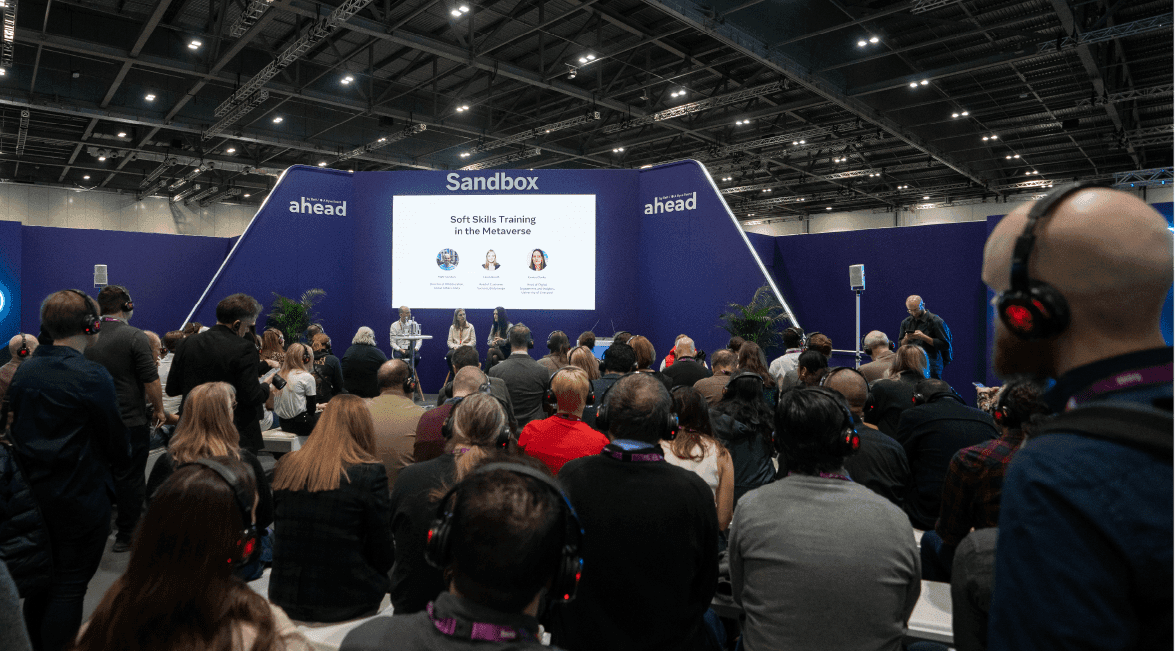
Bett UK 2027
The world’s biggest celebration of education. Bett UK 2026 welcomed over 37,000 members of the global education community, including 14,000 education decision makers and 700+ exhibitors from across 130 countries. Join us in 2027 as we come together once again with one shared purpose: to drive better education globally. Explore the best of EdTech in one place Explore the highest quality EdTech, take part in world leading demos and collaborate with industry leaders during three days of EdTech excellence. Bett UK 2027 is a must-attend event with the power to make a genuine impact on the lives of teachers and learners. Meet the buyers who shape the future of education We're bringing your target audience all together in one place and providing you with an unparalleled opportunity to meet them. Join Bett to save time, maximise your return on investment and unlock new opportunities at Bett UK 2027. Be part of the world’s leading EdTech event Discover groundbreaking solutions, connect with 37,000+ education professionals, and hear from inspiring global speakers. Don’t miss your chance to shape the future of education. Register today. Free for all educators.