
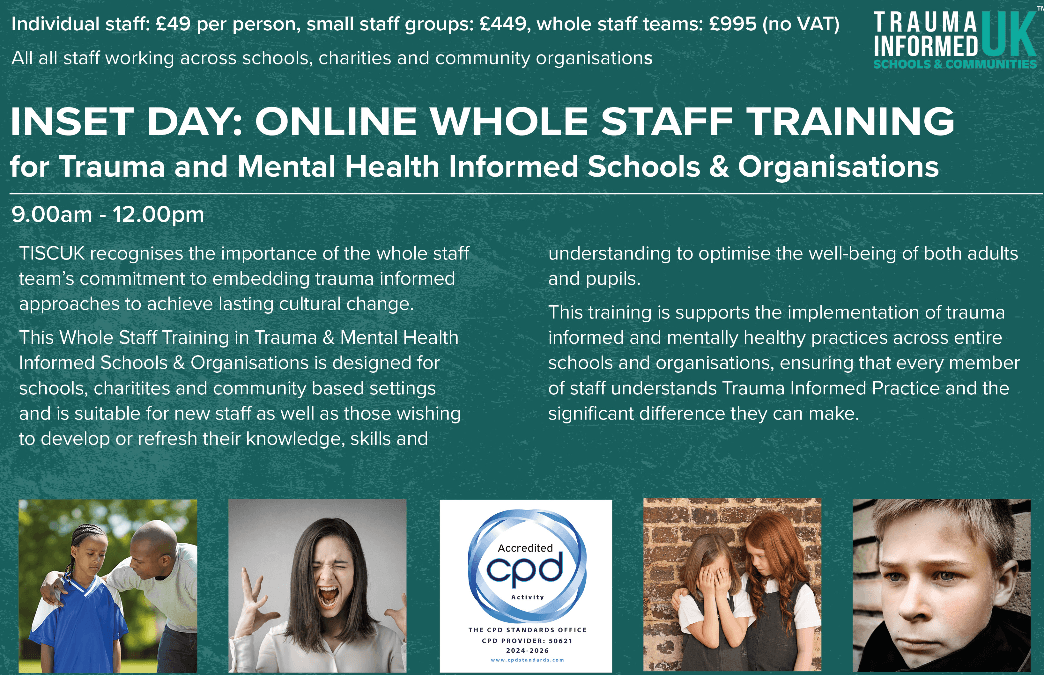
Insert Day: Online Whole Staff Training
Wednesday, September 2, 2026
Date
9:00 AM - 12:00 PM
Time
Zoom
Location
£49 - £995
Cost
About This Event
The Whole Staff Training is available to commission on a date of your choice.
We will be hosting a TISCUK National INSET Day Whole Staff Training which welcomes staff from all setting's including schools, charities and community organisations and is perfect for new staff member and thos wishing to refresh their knowledge.
For: All welcome - professionals, volunteers, community workers and parents
Cost: £49 per person, small staff groups £449, whole staff teams £995 (no VAT)
TISCUK recognises the importance of the commitment and determination of the whole staff team to fully embed any approach or cultural change. The Whole Staff Training is designed to support whole setting implementation of trauma informed and mentally healthy practices into schools and organisations, ensuring that staff have the knowledge, skills and understanding to optimise the well-being of both adults and children/young people in their school/setting. Delegates will learn key relational approaches and interventions to positively impact the whole school/setting culture.
The training is available as a 3 or 6 hour session. The full day session offers more opportunity to explore practical skills and experiential learning.
The optional 3 hour Part 2 training builds on the previous learning and is designed to be delivered two terms after Part 1. The focus is on relational skills for staff and implementation, and you will gain deeper insight into key skills and practical strategies for developing positive relationships with children and young people.
Who is This Event For?
Related Events

Teaching Climate Preparedness Course

Welcome to Teaching Climate Preparedness, a comprehensive course designed to empower you with the confidence and skills to effectively teach climate preparedness using a holistic framework, developed by the British Red Cross. This course equips you with the resources, skills and training needed to successfully implement the holistic framework when teaching climate preparedness with your young people. Learning outcomes By completing this course, you will: Demonstrated an understanding of a holistic approach to climate education and why this is appropriate given the topic. Have gained an understanding of what extreme weather and eco-anxiety are, how they affect young people, and how to support emotional wellbeing through climate education. Identified key benefits of using the Weather Together toolkit to teach climate preparedness. Gained practical skills to use the Weather Together toolkit with young people. Masterclasses are available for groups of five or more and can be delivered online or face-to-face, subject to facilitator availability. To book a group masterclass, email redcrosseducation@redcross.org.uk with your group size, preferred dates, location and delivery method.

Teaching about War and Conflict Course
This course covers an introduction to teaching about global conflicts through the rules of war. It also includes handling the challenging conversations that can arise from this topic. Learning outcomes By completing this course, you will: Demonstrate an understanding of the principle of neutrality and the rules of war. Apply a five-step method to confidently facilitate challenging classroom discussions. Use our teaching resources to engage and support your students. Masterclasses are available for groups of five or more and can be delivered online or face-to-face, subject to facilitator availability. To book a group masterclass, email redcrosseducation@redcross.org.uk with your group size, preferred dates, location and delivery method.
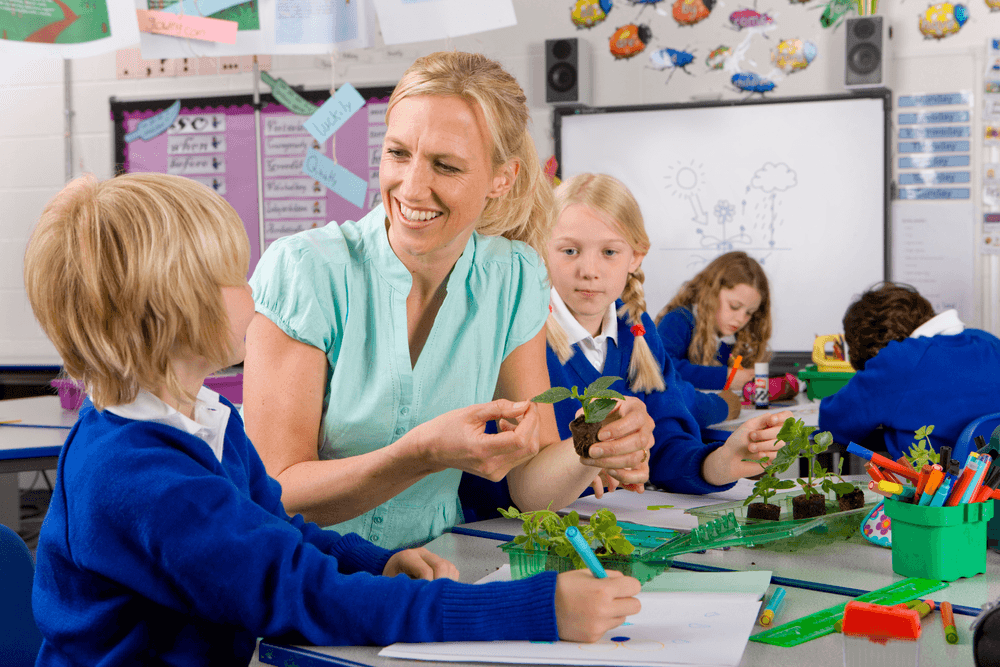
5 proven strategies for educators to help pupils express their emotions
Learn five key relational strategies that adults can use to support children and young people when they are overwhelmed by their emotions. Watch the webinar to learn: Effective strategies to support pupils when emotions feel overwhelming. Suggested practical activities to help embed these approaches in your setting. Ways to create a safe, nurturing environment where pupils feel heard and understood.

Teaching Resilience Course
This course will cover an introduction to teaching resilience using a practical learning approach. Young people are faced with many different challenges each day. As educators, it is important that we help young people develop the skills that can help them to grow their resilience in order to help them cope with adversities they may be faced with. Learning outcomes By the end of this course, you will: Understand what personal resilience is and the challenges facing young people today. Understand the social and emotional skills needed to build resilience and how to teach these in a practical way. Use our teaching resources to engage with the topic of resilience with your students. Masterclasses are available for groups of five or more and can be delivered online or face-to-face, subject to facilitator availability. To book a group masterclass, email redcrosseducation@redcross.org.uk with your group size, preferred dates, location and delivery method.
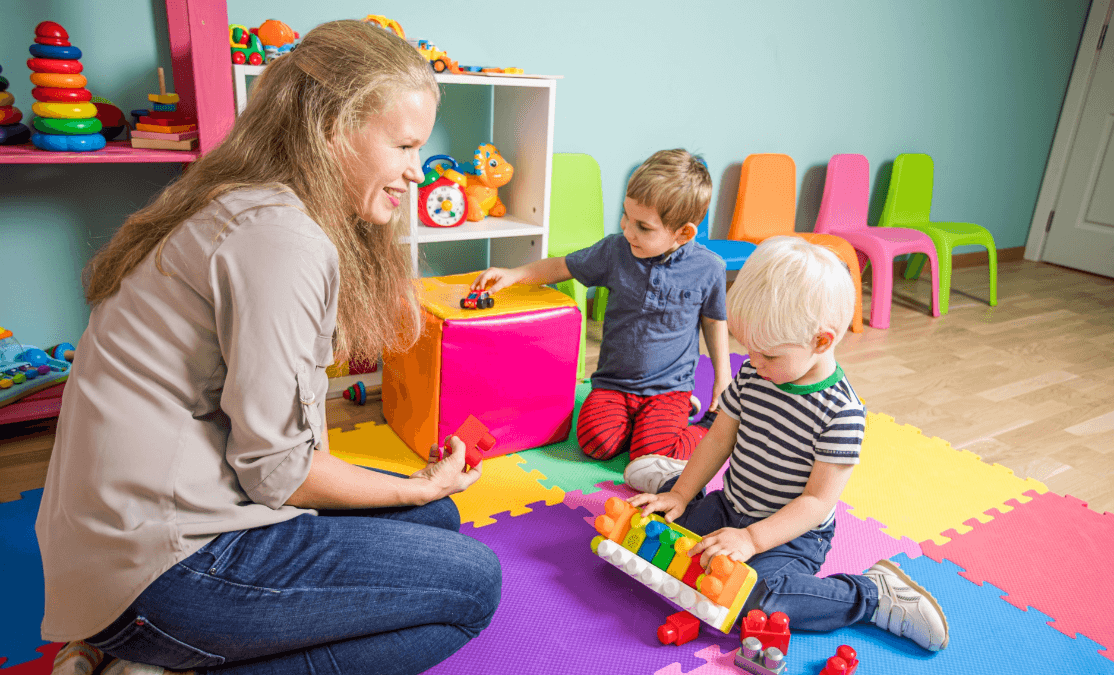
How to create a sense of belonging in the early years
Every child needs to feel that they belong – to know they are safe, seen and significant. Explore how to create a genuine sense of belonging in early years settings and why this is crucial for mental wellbeing and healthy brain development. Watch the webinar to learn: Why a strong sense of belonging is so important for young children's development and what it looks like in early years settings How to create inclusive, predictable spaces where children feel secure enough to express themselves and explore Practical ways to listen to children’s voices and involve them in shaping their environment and routines

Teaching tough topics: Climate risk, resilience and belonging
Young people are growing up with overlapping crises: climate change, conflict, displacement, cost-of-living pressures and rising anxiety about the future. Many bring these questions and worries into the classroom, and teachers are often left to hold complex conversations without feeling fully equipped. This webinar will explore two elements of the citizenship curriculum. First, how do we teach children about resilience? And second, how do we work with young people to discuss the climate debate? Learning outcomes By the end of this webinar, attendees will: Will have explored ideas for teaching resilience with young people Will have more confidence for leading and teaching a curriculum which looks at climate issues and sustainability We will discuss: Which elements of citizenship or personal development are most engaging for students? Approaches in schools to build belonging and resilience in students Approaches which are effective in teaching students about the climate crisis How can we evaluate the impact of our teaching in these areas? What lessons can we learn from the British Red Cross Humankind programme? Given that the curriculum review intends to embed climate and sustainability education throughout England’s school curriculum, what are the key challenges schools face in teaching about these issues and how can we overcome them? Top tips in leading a citizenship and personal development curriculum.

Teaching about Migration Course
This course covers an introduction to teaching about migration using a trauma-informed approach, including the tools, knowledge and resources you need to feel confident teaching about migration, even if you have young people with lived experience of migration in the room. Learning outcomes By completing this course, you will: Understand the experiences of people with refugee status or people seeking asylum, whilst defining key terminology. Understand the impact of trauma on learners and apply six trauma-informed principles to teaching about migration. Use our teacher resources to engage and support your students. Masterclasses are available for groups of five or more and can be delivered online or face-to-face, subject to facilitator availability. To book a group masterclass, email redcrosseducation@redcross.org.uk with your group size, preferred dates, location and delivery method.

Teaching First Aid Course
Learn how to teach first aid to young people using the British Red Cross's Everyday First Aid approach, and using free medically approved, educationally sound resources. Learning outcomes By completing this course, you will: Understand the Everyday First Aid approach and how to use it to effectively teach first aid to your young people. Understand how to navigate and utilise our resources and activities on the First Aid Champions website to effectively teach first aid skills to young people. Be able to use our teaching resources to engage with your young people on the topic of first aid. Be able to use our first aid skill videos, which use the Everyday First Aid approach, to enhance your confidence and knowledge in first aid. Masterclasses are available for groups of five or more and can be delivered online or face-to-face, subject to facilitator availability. To book a group masterclass, email redcrosseducation@redcross.org.uk with your group size, preferred dates, location and delivery method.

The Neuroscience of Feeling ‘At Home’: Why mattering supports belonging and wellbeing
What is the webinar about? Children’s Mental Health Week 2026 theme, This Is My Place , invites us to notice the moments that help children feel emotionally “at home” in school. Research shows that one of the strongest drivers of this feeling is mattering - the sense of being noticed, valued and significant. When children feel they matter, their brains are more able to regulate, connect and engage with learning. But what does mattering look like in everyday practice? And how does it support a deeper sense of belonging and wellbeing? Join Thrive’s Viv Trask-Hall and Laura Nicholson alongside Victoria White, Trust Leader Quality of Education, at The Consortium Academy Trust, as they explore how emotional safety, mattering and relational practice work together to help children feel settled and secure. They unpack the science behind these ideas and link it directly to what educators see in real classrooms. You’ll leave with clear insights, practical reassurance and renewed confidence.

Children and Childhoods Conference 2026
We are excited to announce the seventh biennial Children and Childhoods Conference! Building on a successful legacy, the Children and Childhoods Conference theoretically and empirically engages with children’s lives, across disciplines, to reflect the diverse nature of contemporary childhoods. We continue to uphold our inclusive ethos and aim to bring together academics, pedagogues, practitioners, policymakers, early career and postgraduate researchers and students. DAY 1 Crime, Risk, Safeguarding and Social Harm Day One focuses on how children and young people encounter, navigate, and are shaped by systems of crime, justice, safeguarding, and social regulation. We welcome theoretical, empirical and practice-based contributions that critically engage with issues such as but not limited to: youth justice, safeguarding and protection, children’s rights, social harm, marginalisation, family and community contexts, lived experiences of adversity, risk and resilience, and professional or institutional responses. Interdisciplinary approaches especially those drawing from criminology, childhood and youth studies, social work, education, sociology, psychology, and law are strongly encouraged. DAY 2 Childhoods at Crossroads Day Two contextualises childhoods on the edge in global perspectives of childhoods lived in an era of intensifying childhood poverty, political instability and rapid technological change. Prolonged stagnation in global economic development has contributed to rising unemployment and a widening cost-of-living crisis, both of which have intensified childhood poverty in many regions. International, regional and domestic political instability—together with outbreaks of violence—has directly and often lethally affected children and young people, inflicting lasting harm on their families, physical safety, and psychological well-being. A more detailed agenda will be provided closer to the conference.

CPD accredited Supporting Children with Their Mental Health
A 3 hour course, highlighting the different ways we can support children of all ages with their mental health! This training is aimed at anyone currently working with young people and wanting to better equip themsleves for supporting them with their mental health, or anyone hoping to start a career on this path. We will look at: Emotion language and body mapping Creating timelines to better understand the child Supporting children with anxiety How to help without words Sessions for improving self esteem This training is ran by our founder Amy, who is a person centered psychotherapist and has supported children with their mental health for over 6 years.
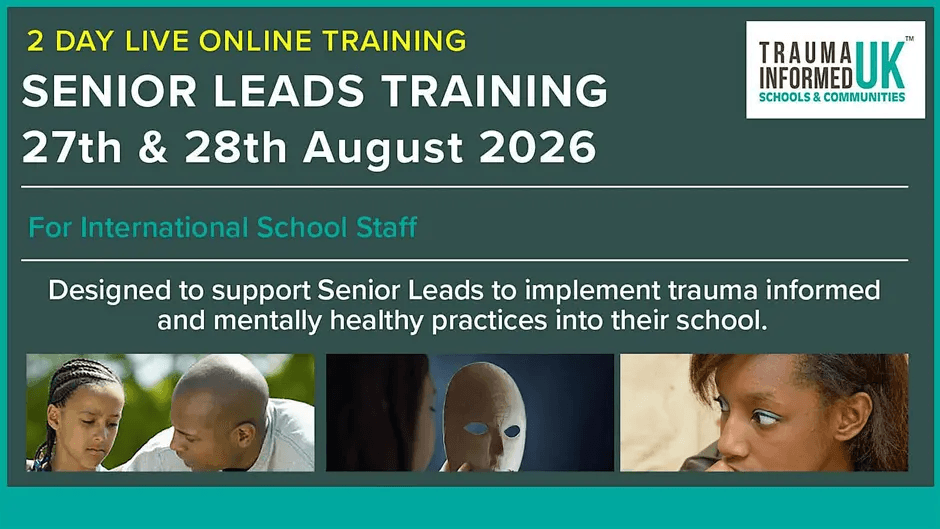
International Schools Senior Lead Training 27th & 28th August 2026
2 Day Senior Lead Training for International Schools Timing Sessions run: 7.30am-2pm London UK Time 10.30am-5pm Dubai time (GST) This course is designed to support Senior Leaders in embedding trauma-informed and mentally healthy approaches across their school communities. Trauma Informed Schools UK (TISUK) recognises the vital role Senior Leaders play in shaping school culture, staff wellbeing and emotionally safe learning environments. This training provides leaders with the knowledge, understanding and practical strategies needed to implement sustainable whole-school approaches that support both student and staff wellbeing. Delegates will gain evidence-informed, practical approaches to supporting emotional regulation, relational practice, inclusion and readiness to learn across the school community. The course also provides a strategic overview of the TISUK Diploma in Trauma and Mental Health Informed Schools and Communities (Practitioner Status), enabling Senior Leaders to effectively support practitioners within their setting and develop a consistent whole-school approach to wellbeing and mental health. The training aims to positively impact pupils, staff and the wider school community by strengthening psychologically safe, relational and mentally healthy cultures for all. The innovative relational, regulatory and reflective approaches shared throughout the course are informed by over 1,000 evidence-based studies in neuroscience, psychology and child development, alongside the work of leading psychologists and educators.